Table of Contents
ToggleTobacco baskets bring instant warmth and character to any wall. These round, flat woven baskets were originally used for sorting and drying tobacco leaves in the American South, but they’ve found new life as statement pieces in modern farmhouse interiors. Their natural texture, earthy tones, and handcrafted appeal make them versatile enough to work in everything from traditional farmhouses to urban lofts with rustic touches. Unlike mass-produced wall art, each basket carries unique imperfections and patina from decades of use. For homeowners looking to add depth and visual interest without heavy lifting or complex installation, tobacco baskets deliver maximum impact with minimal fuss.
Key Takeaways
- Tobacco basket wall decor brings authentic farmhouse character to any room with lightweight, affordable pieces that are easy to hang and rich in handcrafted patina.
- Authentic vintage baskets sourced from antique stores, flea markets, and estate sales show unique variations in color and weaving that reproductions cannot replicate.
- Strategic placement matters: use a single large basket as a statement piece for small walls, or arrange multiple baskets in odd-number groupings for larger spaces that need visual interest.
- Proper hanging requires locating the basket’s center of gravity and using either single or dual nails threaded through the weaving, with drywall anchors rated for 5+ pounds for secure installation.
- Pair tobacco baskets with complementary natural materials like wood elements, neutral paint colors, matte metal accents, and greenery to create a cohesive farmhouse aesthetic without visual clutter.
What Is Tobacco Basket Wall Decor and Why Is It So Popular?
Tobacco baskets are shallow, circular woven baskets typically ranging from 18 to 36 inches in diameter. They were hand-woven from materials like oak or hickory splits, with a tight weave designed to hold delicate tobacco leaves during the curing process. Most authentic baskets date from the early-to-mid 20th century and feature variations in color, from pale blonde to rich tobacco brown, depending on age, wood type, and exposure to the elements.
The farmhouse decor trend brought these agricultural tools into living rooms, entryways, and dining spaces. Their popularity stems from several practical factors: they’re lightweight (usually under 3 pounds), easy to hang, and affordable compared to framed art. The round shape breaks up the visual monotony of rectangular frames and mirrors, while the woven texture adds tactile dimension that flat artwork can’t match.
Authentic baskets show signs of age, slight warping, split weaving, nail holes, or tobacco staining, which adds to their appeal rather than detracting from it. Reproductions exist, but they lack the depth of color and craftsmanship of originals. The difference is noticeable: vintage baskets have irregular weaving patterns and wood that’s darkened unevenly over time, while new versions look uniform and lack patina.
Where to Find Authentic Tobacco Baskets for Your Home
Sourcing authentic tobacco baskets takes some hunting, but several reliable channels exist. Antique stores and flea markets in Southern states, particularly North Carolina, Kentucky, and Virginia, offer the best selection since these were tobacco-growing regions. Prices typically range from $15 to $60 depending on size, condition, and local demand.
Online marketplaces like Etsy, eBay, and Facebook Marketplace provide broader access but require careful vetting. Look for sellers who show close-up photos of the weaving, back side, and any damage. Ask about diameter, actual wood type (not just “natural materials”), and whether it’s been treated or refinished. Authentic baskets shouldn’t smell like fresh wood or varnish.
Estate sales and farm auctions occasionally yield entire lots of agricultural items, including tobacco baskets. This route often delivers the best value but requires flexibility in timing and willingness to bid. Many estate sale companies list inventory online beforehand.
Repro baskets are widely available at home decor retailers for $20 to $40. They work fine if the goal is simply achieving the farmhouse aesthetic, but they won’t develop character over time the way vintage pieces do. Some homeowners mix one or two authentic baskets with reproductions to anchor a gallery wall without breaking the budget.
Creative Ways to Style Tobacco Baskets on Your Walls
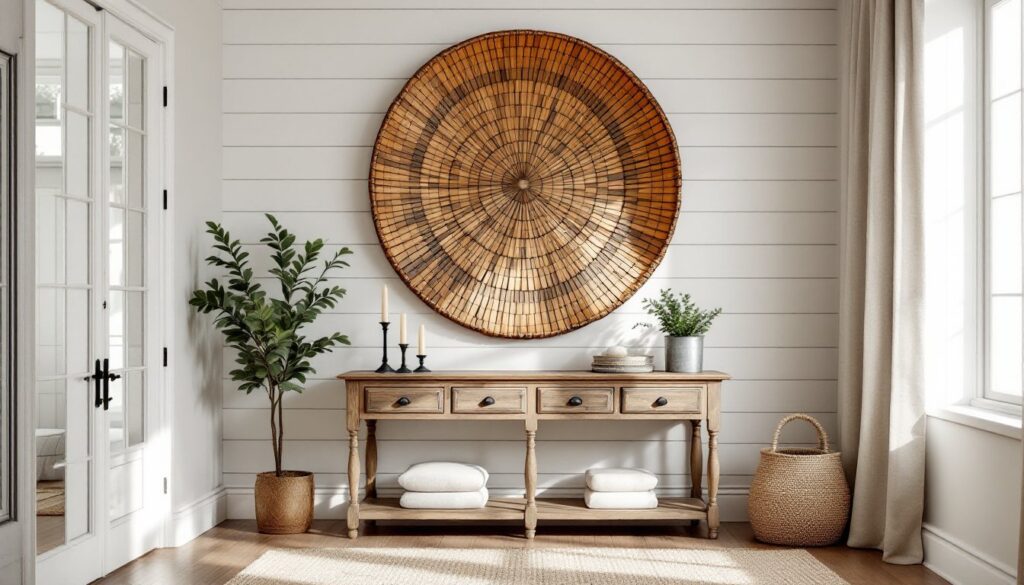
Tobacco baskets work in nearly any room, but placement and grouping determine their visual impact. A single large basket (30+ inches) above a console table or sofa creates an instant focal point. Pair it with simple flanking elements, candlesticks, small framed prints, or potted greenery, to balance the composition without competing for attention.
For entryways or narrow hallways, try a vertical arrangement of three baskets in graduated sizes. This draws the eye upward and makes tight spaces feel taller. Overlap the edges slightly (about 2 inches) for a layered effect, or space them 4 to 6 inches apart for cleaner separation.
Dining rooms benefit from asymmetrical clusters above a buffet or sideboard. Group four to six baskets of varying sizes, mixing in other circular or organic shapes like wooden dough bowls, wrought iron trivets, or woven chargers. The key is maintaining odd-number groupings and varying the spacing to avoid a rigid, grid-like appearance. Incorporating elements inspired by fall porch decorating ideas can add seasonal dimension to your arrangement.
Kitchens handle tobacco baskets especially well. Hang a collection above open shelving or alongside a plate wall to reinforce the rustic aesthetic. The natural wood tones complement butcher block countertops, subway tile, and farmhouse sinks.
Single Statement Piece vs. Gallery Wall Arrangements
The choice between one large basket or multiple smaller ones depends on wall size, room scale, and existing decor density. A single statement basket works best when:
- The wall space is limited (under 4 feet wide)
- Other decor elements in the room are already visually busy
- You want a clean, minimalist farmhouse look
- The basket itself is particularly striking (unusual size, exceptional patina)
Gallery wall arrangements make sense when:
- You have a large blank wall (8+ feet wide) that needs anchoring
- The room feels sparse and needs layered visual interest
- You’ve collected multiple baskets and want to showcase the variety
- You’re mixing baskets with other farmhouse wall decor (signs, framed prints, mirrors)
For gallery walls, lay out the arrangement on the floor first. Use painter’s tape on the wall to mark basket positions before hammering any nails. Start with the largest basket as your anchor point, then build outward. Maintain 3 to 5 inches of breathing room between pieces to avoid a cluttered look.
DIY Tips for Hanging and Securing Tobacco Baskets
Tobacco baskets are forgiving to hang, but proper technique prevents damage to both the basket and the wall. Most baskets weigh under 2 pounds, so standard picture-hanging hardware handles them easily. The challenge is working with the basket’s construction, there’s no built-in hanger, and the woven back is too delicate for direct nailing.
Materials needed:
- Measuring tape
- Pencil
- Level (a 2-foot torpedo level works well for smaller baskets)
- Picture-hanging nails or drywall anchors rated for 5+ pounds
- Thin wire or jute twine (optional, for larger or heavier baskets)
- Safety glasses (anytime you’re hammering overhead)
Step-by-step hanging process:
-
Locate the basket’s center of gravity. Hold it by a single point on the rim until it hangs level. Mark this spot lightly with a pencil.
-
Choose your hanging method. For baskets under 20 inches, a single nail through the weaving at the top works fine. For larger baskets (24+ inches), use two nails spaced 4 to 6 inches apart to prevent tilting. Some people thread wire horizontally across the back through the weaving, creating a traditional picture wire setup, this distributes weight more evenly and allows for leveling adjustments after hanging.
-
Mark the wall. Measure and mark where the nail(s) will go. Use a level to ensure the mark is plumb, especially for multi-basket arrangements. On drywall, a standard picture nail angled upward at 45 degrees holds fine. For plaster walls, pre-drill a small pilot hole to prevent cracking.
-
Drive the nail(s). Aim for a stud if possible, use a stud finder or knock test to locate one. If no stud is available where you need it, use a drywall anchor rated for 5 to 10 pounds. The basket itself is light, but the anchor prevents slow pulling over time.
-
Hang and adjust. Slip the basket onto the nail, threading through the weaving. Step back and check level. If it tilts, try shifting the nail position slightly or adding a second support point.
Pro tips:
- Vintage baskets often have existing nail holes from previous hanging. Use these when possible to avoid creating new weak points in the weave.
- If the weave is especially brittle or loose, reinforce the hanging point on the back side with a small square of felt or fabric glue before hanging. This prevents the splits from tearing under the basket’s weight.
- For very large baskets (30+ inches), consider using two French cleat hangers on the back instead of threading through the weave. This approach is more invasive (requires attaching hardware to the basket) but provides rock-solid stability.
Pairing Tobacco Baskets with Other Farmhouse Decor Elements
Tobacco baskets anchor a room best when surrounded by complementary textures and tones. Wood elements create natural harmony: a chunky floating shelf below a basket wall, a reclaimed barn door, or a live-edge coffee table all reinforce the rustic vibe without competing visually.
Neutral paint colors let the baskets shine. Warm whites, soft grays, and greige tones provide clean backdrops that emphasize the baskets’ texture. For bolder contrast, try deep charcoal or matte black walls, the baskets pop dramatically against dark backgrounds. Inspiration from Southern home design often features this high-contrast approach in modern farmhouse interiors.
Metal accents balance the organic warmth of woven wood. Pair baskets with wrought iron candleholders, galvanized buckets, or industrial-style light fixtures. The mix of materials keeps the space from feeling too monochromatic or overly “country.”
Greenery softens the composition. A trailing pothos or eucalyptus garland draped near (not over) the baskets adds life without hiding the texture. For seasonal variation, swap in cotton stems in fall or fresh magnolia in winter.
Textile layers echo the baskets’ handcrafted quality. Linen curtains, chunky knit throws, and jute rugs all share that tactile, natural-fiber aesthetic. The key is avoiding overload, if you have a large basket wall, keep surrounding textiles simple and monochromatic.
Avoid these common pairing mistakes:
- Overly matchy-matchy farmhouse signs with scripted quotes. One subtle word sign is plenty.
- Too many competing circular shapes in one sight line. Balance baskets with rectangular mirrors or linear shelving.
- Shiny, glazed ceramics or modern metallics. Stick to matte finishes and distressed metals.
- Bright, saturated colors. Tobacco baskets live in the neutral-to-earth-tone spectrum: hot pink pillows will clash.
For those drawn to Western living design, tobacco baskets blend seamlessly with leather furniture, Navajo-inspired textiles, and desert botanical prints. The natural materials bridge traditional Southern farmhouse style with Southwestern ranch aesthetics.
Conclusion
Tobacco baskets deliver authentic farmhouse character without the commitment of permanent architectural changes. They’re lightweight, affordable, and forgiving to install, ideal for renters and homeowners alike. Whether displaying a single statement piece or building a full gallery wall, the key lies in balancing the baskets’ rustic texture with clean backgrounds and complementary natural materials. Start with one or two baskets to test placement and scale, then expand the collection as the space dictates.