Table of Contents
ToggleMost staircases are treated like hallways, purely functional space that gets paint and maybe a handrail. But if you’ve got a staircase visible from your entryway or living room, you’re missing a serious design opportunity. These vertical surfaces offer prime real estate for color, pattern, texture, and personality, and decorating them doesn’t require a renovation budget or structural work. Whether you’re working with a narrow builder-grade staircase or a wide vintage one with character, small updates can shift the whole feel of your home. Here are 15 practical, high-impact ideas that range from weekend projects to multi-day makeovers.
Key Takeaways
- Staircase decor transforms an overlooked vertical space into a high-impact design focal point without requiring structural changes or a large budget.
- Painted or patterned risers deliver maximum visual impact at minimal cost, using satin or semi-gloss paint applied over properly primed surfaces for durability.
- Strategic lighting—including recessed step lights, wall sconces, and motion-sensor switches—improves both safety and aesthetic appeal of your staircase.
- Stair runners reduce noise, add warmth, and provide traction while allowing you to preserve exposed wood or painted edges on treads.
- Weekend-friendly projects like painting risers, applying peel-and-stick wallpaper, or installing simple runners can completely refresh your staircase for under $100.
Why Your Staircase Deserves Design Attention
Staircases occupy vertical real estate that often goes underutilized. Unlike a wall you pass occasionally, stairs get daily traffic and tend to sit in high-visibility zones, entryways, hallways, open living areas. That makes them a natural focal point, whether you’ve planned for it or not.
From a design perspective, staircases offer three distinct surfaces: the risers (vertical face of each step), the treads (horizontal walking surface), and the adjacent wall. Each can be treated separately or coordinated into a cohesive look. Risers are ideal for pattern and color since they don’t take wear. Treads need durable finishes or protective coverings like runners. Walls provide space for art, lighting, or architectural details.
Decorating a staircase also tends to be a gateway project. It’s contained, it doesn’t require permits (assuming you’re not altering structure), and most updates are reversible. You can test bold choices, like a dark accent wall or patterned tile-effect paint, without committing an entire room. Plus, the vertical nature of stairs naturally draws the eye upward, amplifying the impact of whatever you put there.
Wall Art and Gallery Displays for Staircase Walls
Stairwell walls are tricky because they’re long, angled, and often narrow. A single large piece can feel off-balance, and a grid layout rarely works with the slope. The solution: treat it like a gallery wall with a rhythm that follows the stair line.
Ascending Layout
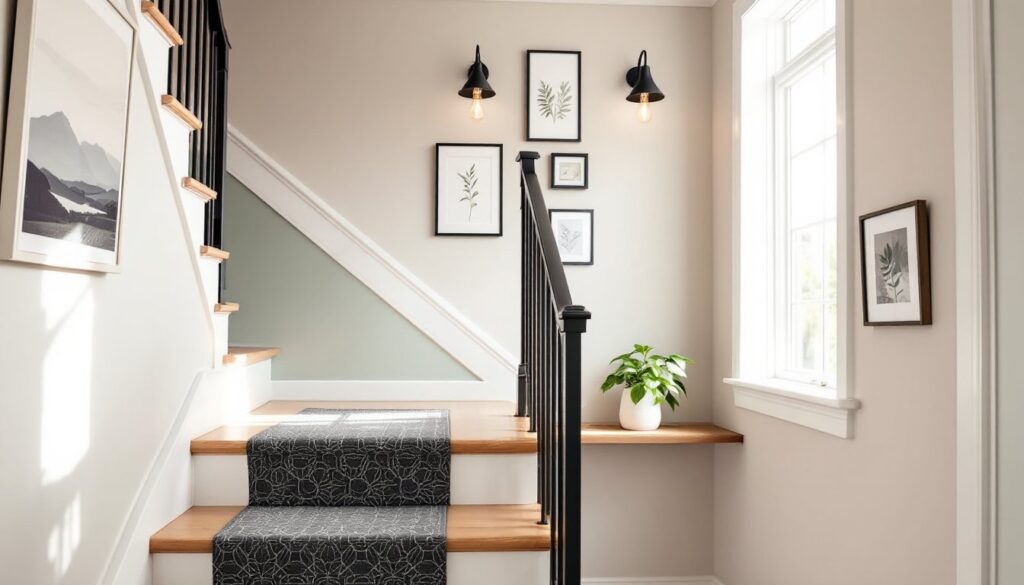
Start at the bottom and arrange frames so the bottom edges form a diagonal line that mirrors the stair angle. This creates visual flow and keeps the wall from feeling chaotic. Frames don’t need to match, but keep mat widths and frame profiles similar for cohesion. Aim for 2-4 inches of spacing between frames. Use a laser level or painter’s tape to map placement before hammering.
Floating Shelves
Narrow floating shelves (4-6 inches deep) mounted in a staggered or aligned pattern let you rotate decor seasonally. They work especially well on wider stairwells where frames alone feel sparse. Stick to lightweight items, small plants, candles, or framed photos, since deeper shelves can create a tripping hazard if they overhang the stairs.
Statement Wallpaper or Mural
If hanging multiple pieces feels fussy, consider a bold wallpaper or peel-and-stick mural on the stairwell wall. Vertical patterns (like stripes or tall botanicals) emphasize ceiling height. Peel-and-stick options from companies specializing in modern home inspiration make this a renter-friendly option. Measure carefully, stairwell walls are longer than they look, and most murals are sold by the panel.
Creative Stair Riser Patterns and Paint Ideas
Painted or papered risers are one of the highest-impact, lowest-cost staircase upgrades. Since risers don’t take foot traffic, they’re ideal for experimenting with color and pattern.
Painted Patterns
Alternating colors (two-tone or ombre gradients) create rhythm without requiring precision. For something bolder, try stenciling a geometric or floral pattern on each riser. Use satin or semi-gloss interior paint, it’s scrubbable and holds up better than flat. Prep is critical: sand lightly, clean with TSP or a degreaser, prime if you’re going from dark to light, then apply two coats. Let each coat dry fully (usually 2-4 hours) to avoid tack.
Peel-and-Stick Tile Decals
Vinyl tile decals designed for backsplashes work just as well on risers. Moroccan, Spanish, or geometric patterns are common. Measure riser height and width first, most risers are around 7-7.5 inches tall, but older homes can vary. Decals are removable, making them a good option for renters or anyone testing a look. Clean the surface with rubbing alcohol before applying to ensure adhesion.
Wallpaper Risers
Peel-and-stick wallpaper or standard wallpaper applied with adhesive gives you more pattern options than decals. Cut pieces slightly oversized, apply carefully to avoid bubbles (a plastic smoother helps), then trim edges with a utility knife. This approach works beautifully on staircases inspired by budget decor projects that lean into bold, colorful choices.
Safety Note
Avoid painting treads with anything slick. If you want color on treads, use porch and floor paint with added grit or apply a clear non-slip coating over standard paint.
Lighting Solutions That Elevate Your Staircase
Lighting a staircase isn’t just about visibility, it’s about safety and drama. Poorly lit stairs are a fall hazard, especially at night. But the right lighting setup can turn a utilitarian feature into a showpiece.
Recessed Step Lights
LED strip lights or small recessed puck lights installed along the stringer (the structural side piece) or under the nosing (front edge of each tread) provide low-level illumination that doesn’t glare. These are usually 12V or 24V low-voltage systems, wired to a transformer. Installation requires cutting into drywall or stringer material, so it’s best done during a remodel or if you’re comfortable with basic electrical work. Some kits are plug-in with adhesive-backed strips, which work if you have an outlet nearby and can conceal the cord.
Wall Sconces
Mounted at intervals along the stairwell wall, sconces add ambient light and architectural interest. Space them 6-8 feet apart vertically, and mount at a consistent height relative to tread level (not wall height, which changes with the slope). Hardwiring requires access behind the wall and potentially running new cable, so battery-powered or plug-in sconces are easier retrofits.
Pendant or Chandelier Over the Landing
If your staircase has a tall ceiling or a landing area, a statement pendant or small chandelier draws the eye up and anchors the space. Make sure the bottom of the fixture is at least 7 feet above the floor to meet code and avoid head clearance issues. Use a dimmer to adjust mood and reduce glare at night.
Smart Bulbs and Motion Sensors
Swapping standard bulbs for smart LEDs lets you adjust color temperature and brightness from your phone. Pair with a motion sensor switch so lights activate automatically when someone approaches, helpful for late-night trips. Most motion sensors replace a standard light switch and don’t require new wiring.
Adding Texture with Runners, Railings, and Natural Elements
Texture softens the hard surfaces of wood, metal, and drywall that dominate most staircases. It also helps with acoustics, stairs can echo, especially in open-plan homes.
Stair Runners
A runner is a narrow carpet that covers the center of each tread, leaving wood or painted edges exposed. Standard runner widths are 27 or 31 inches. Runners reduce noise, add warmth, and provide traction. They can be stapled directly to treads (permanent), held with stair rods (traditional, semi-permanent), or installed with double-sided carpet tape (easiest DIY method). Wool or wool-blend runners are durable and naturally stain-resistant. Synthetic options are cheaper but show wear faster. Stripes, geometrics, or subtle patterns hide dirt better than solids.
If you’re installing a runner yourself, start at the bottom and work up. Use a knee kicker or hand stretcher to pull the carpet taut at each tread, then staple or tape along the back edge of the tread and the bottom of the riser. Trim excess with a utility knife.
Railing Upgrades
Swapping builder-grade wood balusters for metal ones (like wrought iron or cable rail) modernizes the look without structural work. Cable railing requires tensioned horizontal cables spaced no more than 4 inches apart to meet IRC code for child safety. Installation involves drilling through posts and threading cables with turnbuckles for tensioning, doable for a confident DIYer with a drill press or hole saw, but fussy to get perfectly level.
Painting an existing railing is simpler. Sand lightly, prime with a bonding primer if going from stain to paint, then use semi-gloss or satin trim paint. A small foam roller works well on spindles: a brush gets into details.
Greenery and Natural Accents
Trailing plants on wall-mounted shelves or small potted plants on landings soften the space and improve air quality. Pothos, philodendron, and spider plants tolerate lower light typical of interior stairwells. Avoid placing plants where they overhang the stairs, tripping hazard.
Woven baskets, driftwood, or a jute runner add organic texture. These elements pair well with the aesthetic found in many DIY room makeovers that favor natural materials and layered finishes.
Budget-Friendly DIY Staircase Decor Projects
Not every staircase upgrade requires a big budget. Here are four high-impact projects you can knock out in a weekend with basic tools and modest material costs.
Paint the Risers (Under $50)
A quart of paint ($10-$15) and a 2-inch angled brush are all you need. Tape off treads and stringer, sand risers lightly, prime if needed, then apply two coats. Choose a bold color or use painter’s tape to create stripes or chevrons. Total time: 4-6 hours spread over two days (drying time).
Peel-and-Stick Wallpaper Accent Wall ($30-$80)
A single roll of peel-and-stick wallpaper (around $30-$40) covers roughly 30 square feet, enough for many stairwell accent walls. Measure wall dimensions, order slightly more than you need, and apply from top to bottom, smoothing as you go. Use a plastic smoother and a sharp utility knife for clean cuts. Time: 2-3 hours.
Stencil or Hand-Paint Risers ($20-$40)
Buy a stencil ($15-$25) and small craft paint containers. Secure the stencil with painter’s tape, dab paint with a foam pouncer, then move to the next riser. This takes patience but delivers a custom look. Time: 3-5 hours depending on pattern complexity and number of steps.
Update Hardware and Handrail Finish ($25-$60)
Swap outdated newel post caps or finials for modern ones (metal, wood, or resin). Sand and restain or paint the handrail. A can of stain or paint, sandpaper, and a foam brush cost under $30. Time: 2-4 hours plus drying.
Safety Reminder
Wear safety glasses when sanding or cutting, a respirator or N95 mask when working with paint or adhesive in enclosed stairwells, and work gloves when handling rough wood or metal. Ventilate the area with fans or open windows.
Conclusion
A staircase isn’t just a way to get upstairs, it’s a vertical canvas that most homeowners ignore. The ideas here range from quick cosmetic tweaks to more involved lighting or runner installations, but none require a contractor or structural changes. Start with one element, paint, a runner, or a gallery wall, and build from there. The goal isn’t perfection: it’s making a high-traffic space feel intentional instead of leftover.