Table of Contents
ToggleA cluttered mantel stacked with tchotchkes and forced seasonal themes rarely looks finished, it just looks busy. The best fall mantels use restraint, a few high-impact materials, and a color palette that doesn’t scream “craft store.” Whether the goal is rustic farmhouse warmth or something cleaner and more modern, less is usually more. This guide covers practical ways to style a mantel for fall without overbuying, overdoing, or spending a weekend hot-gluing leaves to things. The focus is on quick, scalable arrangements that work for real homes, not staged photo shoots.
Key Takeaways
- Simple fall mantel decor uses restraint and a few high-impact materials to create a finished, intentional look without overwhelming visual clutter.
- A minimal fall mantel is easier to maintain, dust, and transition into the next season by swapping just a few key pieces at a time.
- Natural textures like dried grasses, branches, wood, and muted-tone pumpkins anchor a fall mantel while looking sophisticated and avoiding the craft-store aesthetic.
- Symmetrical, asymmetrical, layered, or garland-based arrangements can all work for simple fall mantel styling depending on the space and personal preference.
- Budget-friendly options like shopping your yard, thrifting mismatched pieces, and DIY paint tricks can create a polished fall mantel without spending much money.
Why Simple Fall Mantel Decor Works Best
Overcomplicated mantel displays are harder to install, harder to clean, and harder to adjust if something doesn’t look right once it’s up. A simple approach saves time and money while giving more flexibility to swap elements in and out as the season progresses. It also prevents the “theme park” effect that happens when every surface gets buried under pumpkins, fake leaves, and signs with script fonts.
From a design standpoint, restraint creates focus. When a mantel features three or four well-chosen items instead of fifteen, the eye knows where to land. This is especially important if the fireplace surround itself has strong visual details, tile, stone, or heavy molding. Competing textures cancel each other out.
Practically speaking, simple setups are easier to maintain. Dust settles on every horizontal surface, and the more objects there are, the longer it takes to wipe them down. A streamlined mantel doesn’t collect clutter as fast and stays photogenic longer, which matters if the space gets used for gatherings or family photos.
Finally, a minimal fall arrangement is easier to transition. Swap out a few pieces in November and it’s Thanksgiving-ready. Pull the warm tones and replace them with greenery in December, and it’s halfway to holiday without a full teardown. That kind of modularity is what makes seasonal decorating sustainable for people who don’t want to redecorate from scratch every six weeks.
Essential Elements for a Simple Fall Mantel
Building a strong fall mantel starts with choosing the right foundational pieces. These are the materials and colors that do the heavy lifting without requiring a lot of styling skill or extra accessories.
Natural Textures and Organic Materials
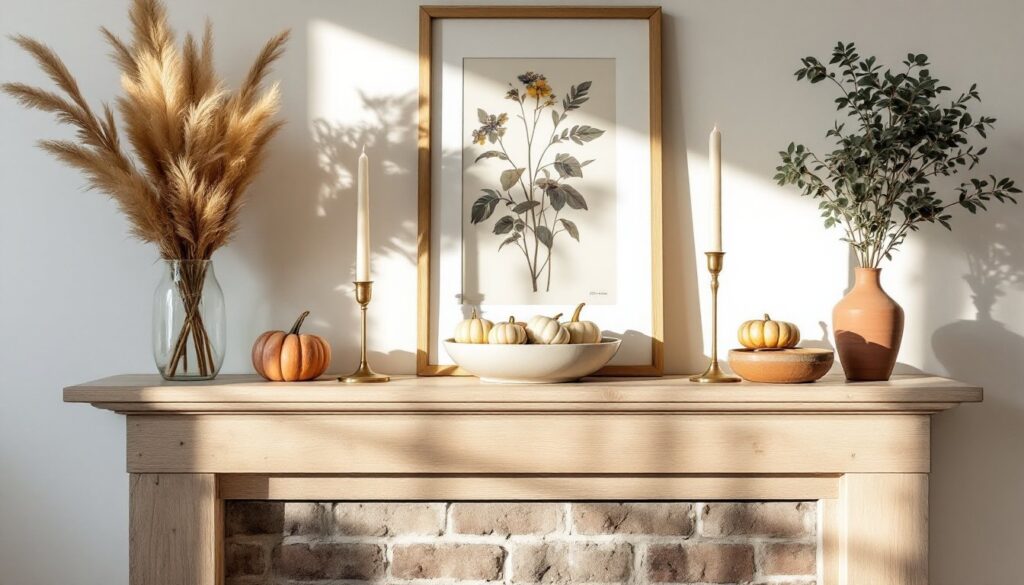
Wood, dried grasses, branches, and unfinished ceramics anchor a fall mantel without reading as overly seasonal. A reclaimed wood beam propped horizontally or vertically adds dimension and warmth. Dried pampas grass, wheat stalks, or birch branches in a ceramic vase or galvanized bucket bring height and movement without looking precious.
Avoid anything overly polished or lacquered. The goal is texture, not shine. Natural fiber baskets, burlap ribbon (used sparingly), and terracotta pots all contribute a grounded, lived-in feel that works whether the home leans farmhouse or contemporary.
Pumpkins and gourds are classic for a reason, but choose varieties that don’t look mass-produced. Heirloom pumpkins in muted greens, blues, and whites read more sophisticated than bright orange carving pumpkins. Real pumpkins last about three to four weeks indoors if kept cool and dry. Faux versions in resin or ceramic offer more longevity and can be reused year over year, just make sure they’re matte-finished, not glossy.
Consider scale. A mantel that’s 60 inches wide can handle a statement piece like a large dough bowl filled with mini pumpkins or a tall arrangement of branches. Narrower mantels, around 48 inches, work better with a pair of matching candlesticks and a single low centerpiece.
Warm Autumn Color Palettes That Pop
The traditional fall palette, burnt orange, deep red, mustard yellow, and chocolate brown, works, but it’s not the only option. For a more modern take, try rust, terracotta, sage green, and cream. These colors feel autumnal without leaning too harvest-themed.
If the room’s existing decor includes cool grays or whites, warm metallics like brass, copper, or aged gold can bridge the gap. A brass candelabra or a copper pitcher adds just enough warmth without introducing too many new colors.
Color blocking also helps. Instead of scattering orange and yellow throughout the display, group similar tones together. Place three white pumpkins on one side, a cluster of rust-colored candles in the middle, and a green eucalyptus bundle on the other end. The arrangement feels intentional, not random.
Paint can unify mismatched elements. A collection of thrifted candlesticks in different styles can be spray-painted in a single matte finish (like chalky white or matte black) to create cohesion. Just make sure to use a primer if painting over glossy finishes, or the paint won’t adhere properly.
Easy DIY Fall Mantel Arrangements
Setting up a fall mantel doesn’t require advanced floral design skills or expensive materials. These layouts are quick to assemble and easy to adjust.
Symmetrical Arrangement: Start with a large mirror or piece of art centered above the mantel. Flank it with two matching candlesticks or vases. Place a low bowl or tray in the center of the mantel surface with a small pumpkin, pinecones, or acorns inside. This layout is foolproof and works in traditional or transitional spaces.
Asymmetrical Arrangement: Anchor one side with a tall element, a stack of vintage books topped with a small pumpkin, or a vase filled with tall branches. Balance the other side with a cluster of lower items, like a trio of pillar candles on a wooden tray or a medium pumpkin next to a small potted mum. Layer in one or two items of medium height in the middle to connect the two sides visually.
Layered Arrangement: Lean a large wooden sign, mirror, or framed print against the wall. Place smaller items in front of it, candlesticks, small pumpkins, or a bowl of acorns. The layering creates depth without taking up much space. This approach is especially useful for mantels with limited depth (less than 6 inches).
Garland-Based Arrangement: Drape a simple garland made from eucalyptus, magnolia leaves, or faux fall foliage along the front edge of the mantel. Secure it with small nails or removable adhesive hooks if the mantel doesn’t have enough weight to hold it in place. Tuck in a few small pumpkins, candles, or sprigs of dried flowers along the garland for added interest. This setup works well if the mantel itself is narrow or if there’s limited space for freestanding objects.
When arranging, step back every few minutes to check the sightline from the room’s main seating area. What looks balanced up close can feel lopsided from across the room. Adjust heights and spacing as needed. If something feels off, try removing one item instead of adding more, overcrowding is a more common problem than under-decorating.
Budget-Friendly Fall Mantel Styling Tips
A polished fall mantel doesn’t require a big budget. Smart sourcing and a few DIY shortcuts keep costs down without sacrificing style.
Shop the yard first. Branches, pinecones, acorns, and interesting seedpods are free. A walk through the yard or a nearby park can yield enough material for a full arrangement. Just make sure to inspect natural materials for bugs before bringing them inside. A quick rinse and a day in the sun usually does the trick.
Thrift stores and yard sales are goldmines for candlesticks, vases, trays, and wooden bowls. Mismatched pieces can be unified with a coat of spray paint. A set of three brass candlesticks from different decades looks intentional when they’re all painted the same color.
Use what’s already on hand. A stack of old hardcover books, a wooden cutting board stood on edge, or a ceramic pitcher from the kitchen can all work as mantel decor. The goal is to repurpose items that already fit the home’s aesthetic, not to buy a whole new set of seasonal accessories.
Homeowners interested in budget home makeovers often find that swapping out just a few key pieces, like pillow covers, throws, or mantel accents, refreshes a room without a full overhaul.
Make faux pumpkins look real. Craft store foam pumpkins can look cheap out of the box, but a light coat of matte chalk paint in cream, sage, or terracotta transforms them. Remove the plastic stems and replace them with real twigs hot-glued into the top. The result is a convincing faux pumpkin that costs a fraction of high-end resin versions.
Print free art. Vintage botanical prints, fall landscape paintings, and autumn-themed typography are available as free downloads from sites like Unsplash or the Library of Congress digital archives. Print them at home on cardstock or at a local print shop, then frame them in thrifted frames. A large print propped on the mantel can serve as a focal point without the cost of custom art.
Buy end-of-season. If planning ahead for next year, buy fall decor in late October or early November when retailers mark down seasonal inventory. Candles, garlands, and faux pumpkins often hit 50-70% off, and they store easily in a plastic bin until the following September.
Candles add impact for less. A cluster of pillar candles in varying heights creates a warm, polished look without much expense. Buy unscented candles in bulk from warehouse stores or online, then group them on a wooden tray or cutting board. Battery-operated LED candles work too, especially if there are kids or pets in the house. Just choose versions with a realistic flicker and avoid the cheap plastic casings.
Conclusion
A simple fall mantel is about making smart choices, not accumulating more stuff. Stick to a few high-impact materials, a cohesive color palette, and arrangements that balance well from across the room. Whether working with a farmhouse mantel or a sleek modern surround, restraint and natural textures beat clutter every time. The result is a space that feels intentional, seasonal, and easy to maintain, without the need for a glue gun or a degree in interior design.