Table of Contents
ToggleCreating a vintage aesthetic bedroom doesn’t require a massive renovation or an antique dealer’s budget. It’s about layering carefully chosen elements, weathered wood, soft textiles, aged finishes, and thoughtful accessories, to build a space that feels both nostalgic and lived-in. Unlike trendy styles that fade in a season, vintage decor draws from decades of design history, offering timeless appeal that adapts to personal taste. Whether someone’s working with a rental restriction or a full bedroom overhaul, the principles remain the same: embrace imperfection, prioritize comfort, and let character drive every decision.
Key Takeaways
- A cozy vintage aesthetic bedroom combines nostalgic design elements with natural materials like weathered wood, linen, and wool to create lived-in charm without requiring expensive renovations.
- Muted color palettes with faded tones—sage green, dusty blue, butter yellow—and flat paint finishes authentically replicate the aging process while avoiding stark whites that clash with vintage decor.
- Mix furniture from different eras and seek solid wood pieces with details like brass hardware, turned legs, and visible joinery rather than matching sets for organic visual interest.
- Layer textiles strategically on the bed using cotton or linen base layers, wool blankets, and decorative quilts, then add throw pillows and rugs in varied textures to maximize coziness.
- Warm-toned lighting through table lamps, dimmable fixtures, and 2700K bulbs creates the soft ambient atmosphere essential to the vintage bedroom aesthetic.
- Estate sales, thrift stores, Facebook Marketplace, and family attics offer budget-friendly authentic vintage pieces that cost far less than retail reproductions when sourced strategically.
What Defines a Cozy Vintage Aesthetic Bedroom?
A vintage aesthetic bedroom balances nostalgic design elements with modern comfort. It’s not about recreating a museum piece, it’s about capturing the worn-in charm of decades past while keeping the space functional for daily life.
The foundation lies in layered textures: linen bedding, wool throws, cotton rugs, and weathered wood surfaces. Unlike minimalist styles that strip rooms to essentials, vintage design embraces abundance, stacks of books, clustered artwork, mismatched furniture that tells a story.
Key characteristics include:
- Patina and age: Finishes that show wear, chipped paint, tarnished brass, faded fabrics, add authenticity
- Mixed eras: Combining Victorian, mid-century, and farmhouse pieces creates visual interest without feeling staged
- Warm, dim lighting: No harsh overhead fluorescents: vintage spaces rely on table lamps, sconces, and candles
- Natural materials: Wood, metal, glass, and ceramic over plastic or engineered composites
This aesthetic works particularly well in older homes with original trim or plaster walls, but it’s equally achievable in modern construction. The trick is avoiding overly coordinated “vintage collections” that feel like a catalog spread. Real vintage spaces evolved over time, and the decor should reflect that organic accumulation.
Choosing the Perfect Vintage Color Palette
Vintage color palettes lean toward muted, dusty tones rather than saturated brights. Think faded rose, sage green, butter yellow, dusty blue, and cream, colors that look like they’ve lived under decades of sunlight.
For walls, avoid stark white. Off-whites and warm neutrals like Benjamin Moore’s “White Dove” or Sherwin-Williams’ “Alabaster” provide a softer backdrop that complements aged furniture and textiles. If adding color, consider historical paint lines that replicate period-accurate hues, many brands offer “heritage” or “historical” collections based on actual paint chip archaeology.
Accent colors should feel organic. Terracotta, ochre, and moss green ground a space without overwhelming it. Deep jewel tones, burgundy, navy, forest green, work well in textiles like velvet curtains or quilts but can darken a room if overused on walls.
Paint finish matters. Flat or matte sheens mimic older paint technology and hide wall imperfections better than satin or semi-gloss. For trim, consider an eggshell finish in a warm white rather than bright white, it reads as more authentic to pre-1960s homes.
Many successful vintage bedrooms stick to a three-color rule: one dominant neutral, one secondary muted tone, and one deeper accent. This prevents the space from feeling too busy while maintaining the layered richness that defines the style. Projects involving budget home makeovers often demonstrate how strategic paint choices dramatically shift a room’s character without structural changes.
Essential Furniture Pieces for Vintage Bedroom Charm
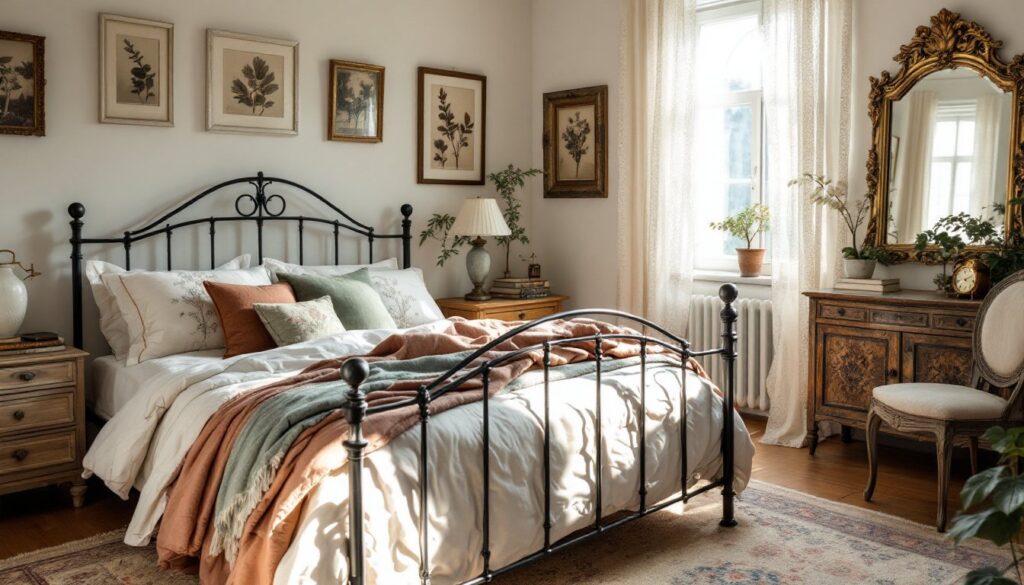
The bed frame anchors the entire room. Iron beds, whether original antiques or modern reproductions, offer instant vintage credibility. Look for details like decorative castings, ball finials, or curved headboards. Wooden frames work equally well, platform beds in walnut or oak, especially those with visible joinery or carved details.
Avoid particle board or laminate furniture. Real vintage pieces use solid wood construction with dovetail joints in drawers and mortise-and-tenon joinery in frames. Even budget finds can be authentic if they’re older pieces needing refinishing.
Nightstands and dressers don’t need to match. In fact, mismatched furniture adds character. A Victorian marble-top washstand beside a mid-century walnut dresser creates visual interest that identical sets can’t achieve. Pieces with retro-style furniture often bridge eras effectively.
Look for these details when sourcing furniture:
- Drawer pulls: Glass knobs, brass drop pulls, or ceramic handles over modern brushed nickel
- Legs: Turned wood, tapered, or cabriole styles rather than straight modern posts
- Finish: Natural wood tones, milk paint, or chippy painted finishes showing layers underneath
A vintage vanity or writing desk adds functionality and period charm. These pieces often feature mirrors with ornate frames and multiple small drawers, perfect for jewelry or cosmetics.
If buying new furniture that reads vintage, prioritize simple silhouettes over ornate reproductions. A basic wooden bed frame with a hand-rubbed oil finish looks more authentic than a heavily distressed piece trying too hard to appear old. Spaces with mid-century influences show how clean-lined vintage furniture creates cozy warmth without visual clutter.
Layering Textiles and Fabrics for Maximum Coziness
Textiles transform a bedroom from decorated to cozy. The layering strategy starts with the bed and expands outward, quilts over sheets, throws over quilts, multiple pillows in varied sizes and textures.
For bedding, natural fibers are non-negotiable. Cotton, linen, and wool breathe better and age more gracefully than synthetics. A vintage quilt or chenille bedspread as the top layer immediately signals the aesthetic. These don’t need to be pristine, slight fading or repairs add authenticity.
Layer at least three textile elements on the bed:
- Base layer: Cotton or linen sheets in white or cream
- Middle layer: Wool or cotton blanket, lightweight quilt
- Top layer: Decorative quilt, chenille spread, or crocheted coverlet
Throw pillows should vary in size and texture. Mix embroidered linen, faded florals, and solid velvets rather than matching sets. Vintage pillowcases from the 1940s-60s, often found at estate sales, bring pattern without feeling too precious.
Window treatments soften hard lines and control light. Linen or cotton curtains in natural tones work better than heavy drapes unless the room’s particularly large or formal. Consider vintage lace panels as sheers, they filter light beautifully and add delicate texture.
Underfoot, layered rugs increase coziness. A larger jute or sisal rug as a base with a smaller Persian or vintage runner layered on top creates depth. Look for rugs with faded colors and worn patterns, the distressing adds character that new rugs lack. Bedrooms designed around farmhouse decor principles frequently demonstrate effective textile layering that balances pattern, texture, and color.
Don’t forget smaller textile touches: a vintage tablecloth as a dresser scarf, embroidered hand towels hung as decor, or a crocheted doily under a lamp base.
Vintage Lighting and Accessories That Add Character
Lighting makes or breaks the vintage atmosphere. Overhead fixtures should be warm-toned and diffused, think milk glass shades, brass or bronze finishes, or even a small chandelier with Edison-style bulbs.
Table lamps are critical for creating ambient layers. Ceramic bases from the 1940s-60s, brass candlestick conversions, or painted porcelain lamps with fabric shades all work. Avoid modern tripod styles or industrial metal task lights, they clash with the softness vintage requires.
Bulb choice matters. Warm white LEDs (2700K) or incandescent-style Edison bulbs in lower wattages (40-60W equivalent) prevent the harsh blue-white glare of standard bulbs. Dimmable fixtures let users adjust ambiance for different times of day.
Accessories should feel collected, not curated:
- Mirrors: Ornate frames in gold or silver leaf, beveled glass, or painted wood frames
- Wall art: Botanical prints, vintage photographs in mismatched frames, old maps, embroidered samplers
- Books: Stacks of old hardcovers (often sold by the foot at antique stores) add instant vintage credibility
- Clocks: Mechanical alarm clocks, wall clocks with Roman numerals, mantel clocks
- Ceramics: Ironstone pitchers, transferware plates, vintage vases
Display accessories in odd-numbered groupings (three candlesticks, five small frames) and vary heights for visual interest. Avoid perfectly symmetrical arrangements, they feel too deliberate.
Safety note: If using vintage electrical items like lamps, have them inspected and rewired if necessary. Old cloth-covered wiring can be a fire hazard. This is particularly important for metal lamps where frayed wiring can create shock risks. Spaces focusing on comfortable, elegant design often balance vintage charm with modern safety updates that remain invisible.
Where to Find Authentic Vintage Decor on a Budget
Building a vintage bedroom doesn’t require a trust fund. The best pieces often come from sources dealers overlook.
Estate sales offer the highest-quality finds at reasonable prices, especially on the final day when sellers discount heavily to avoid hauling items away. Arrive early for first pick or late for best deals, both strategies work depending on priorities.
Thrift stores and Goodwill require patience but yield excellent results. Visit regularly and build relationships with staff who can alert buyers to incoming donations. Focus on items with good bones, solid wood furniture, real brass hardware, quality ceramics, that can be cleaned or refinished.
Facebook Marketplace and Craigslist excel for larger furniture. Search terms like “wood dresser,” “antique bed,” or “vintage nightstand” rather than style names. Sellers often underprice items they consider outdated. Be prepared to haul items yourself, many vintage pieces are heavy solid wood that requires a truck and help.
Flea markets and antique malls sit between estate sales and retail. Prices run higher but selection’s better curated. Negotiate respectfully, most vendors expect some back-and-forth, especially for multiple items or cash purchases.
Online options include Etsy’s vintage section (items must be 20+ years old) and Chairish for higher-end pieces. Shipping costs can be prohibitive for furniture, but smaller accessories ship reasonably.
Family attics and basements are goldmines. Before buying anything, ask relatives if they’re discarding old furniture, linens, or decor. Pieces with family history add personal meaning that store-bought items can’t match.
DIY alternatives work too. New wood furniture can be aged with milk paint, distressing techniques, and hardware swaps. Many bloggers who focus on renovation and DIY projects document these processes with specific product recommendations and step-by-step techniques. Rooms with unique architectural features often require custom sizing that makes vintage reproductions more practical than authentic antiques.
When evaluating any vintage purchase, check structural integrity: open drawers to inspect joinery, test stability by gently shaking, look for signs of water damage or active insect infestation. Cosmetic issues are fixable: structural problems rarely are worth the investment unless someone’s experienced with furniture repair.
Conclusion
Creating a cozy vintage bedroom comes down to intentional choices rather than expensive purchases. By focusing on natural materials, layered textiles, warm lighting, and pieces with genuine character, anyone can build a space that feels both timeless and personal. The beauty of this aesthetic is its flexibility, it adapts to budgets, space constraints, and individual taste while maintaining that lived-in warmth that makes a bedroom truly feel like home.