Table of Contents
ToggleA coffee table isn’t just somewhere to rest your mug, it’s the anchor of your living room and a chance to show off your style. The right decor makes the space feel intentional without looking like you spent hours fussing over it. Whether you’re working with a reclaimed wood farmhouse table or a sleek modern piece, the principles are the same: balance, function, and restraint. This guide walks through practical styling approaches that work for real homes, not just magazine shoots.
Key Takeaways
- Balance function with aesthetics by leaving 60-70% of your coffee table surface clear for actual use while arranging decor in groups of three for visual harmony.
- Apply height variation and layering techniques using books, trays, and decorative objects at different distances to create dimension and prevent a flat, staged appearance.
- Mix textures and materials—ceramic, wood, metal, and woven elements—while limiting your color palette to three colors maximum to achieve intentional decor that avoids clutter.
- Incorporate functional pieces like coasters, decorative boxes, and catch-all bowls that serve dual purposes, turning everyday items into styled accents that enhance your coffee table.
- Refresh your coffee table seasonally by swapping one or two elements (flowers, candles, or books) rather than completely redesigning, keeping your base arrangement intact for cohesion.
- Maintain your styled coffee table weekly by dusting, watering plants, and removing debris to ensure even well-selected decor looks fresh and intentional rather than neglected.
Understanding Coffee Table Styling Basics
The foundation of good coffee table decor comes down to composition and proportion. Think of the table surface like a shallow tray, you’re arranging objects in a limited footprint, so every piece has to earn its spot.
Start by considering the table’s size and shape. A 48-inch rectangular table can handle three distinct groupings, while a 36-inch round table works best with a single centered arrangement. Leave at least one-third of the surface clear for actual use, setting down drinks, remotes, or a laptop.
Height variation keeps things interesting. Mix low objects (books, trays) with taller ones (vases, candlesticks) to create visual depth. Aim for three different height levels across your arrangement.
Materials matter too. Combine textures like smooth ceramic, rough wood, woven baskets, and metal to add richness without clutter. Stick to a cohesive color palette, usually three colors max, to avoid the “garage sale table” look.
The Rule of Three and Layering Principles
The rule of three isn’t design mysticism, it’s how the human eye naturally processes groupings. Odd numbers feel more organic and less staged than even-numbered arrangements.
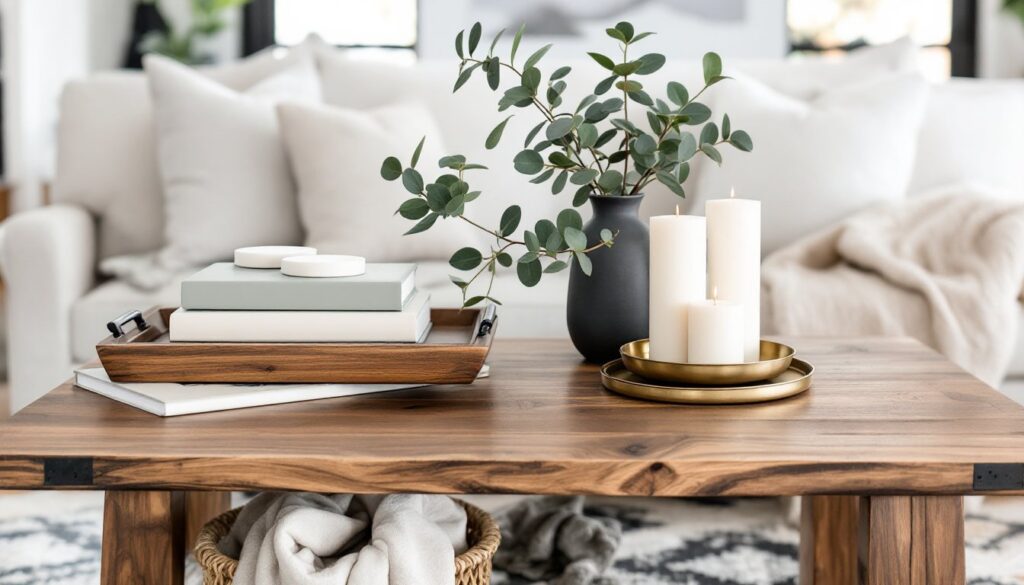
Start with three anchor pieces: typically a tray or stack of books, a decorative object (vase, bowl, sculpture), and something living (plant, flowers, branches). From there, you can layer smaller items within each grouping.
Layering means building depth by placing objects at different distances from the table edge. Put a tray toward one end, place a short stack of books partially on the tray, then set a small object on top of the books. This creates dimension instead of a flat lineup.
The triangle principle works here too. Arrange your three main groups in a triangle pattern, one at each corner of an imaginary triangle across the table surface. This distributes visual weight evenly and guides the eye around the entire table rather than clumping everything in the center.
Essential Decor Elements for a Balanced Coffee Table
Books are the workhorse of coffee table styling. Use hardcover books in sets of 2-4, stacked horizontally. Choose titles with attractive spines or covers that match your color scheme. They add instant height and double as risers for smaller objects. Oversized art or design books work best, think 10×12 inches or larger.
Trays corral smaller items and define zones on the table. A 12-16 inch tray works for most tables. Materials like wood, metal, rattan, or lacquered finishes add texture. Use the tray to hold remotes, coasters, and small decorative pieces that might otherwise look scattered.
Greenery brings life to the arrangement. A small potted plant (6-8 inch pot), a bud vase with fresh stems, or a low succulent arrangement all work. Skip anything that blocks sightlines across the room, keep plants under 12 inches tall unless the table is oversized.
Decorative objects add personality. Choose one sculptural piece, a ceramic bowl, a brass figurine, a coral specimen, a wooden bead garland. The key is restraint. One interesting object beats three mediocre ones.
Candles provide ambiance and height variation. Pillar candles in varying heights (4, 6, and 8 inches) create nice layering. Use a tray or shallow dish underneath to catch wax drips and make them feel cohesive. Unscented or lightly scented works best for shared living spaces.
For those seeking affordable centerpiece ideas, mixing high and low items keeps the look balanced without draining the budget. Pair a splurge piece with thrifted books and grocery store greenery.
Seasonal and Farmhouse-Inspired Coffee Table Displays
Seasonal styling doesn’t mean overhauling the entire table every month. Swap out one or two elements to reflect the time of year while keeping your base arrangement intact.
Spring: Fresh tulips or daffodils in a ceramic pitcher, a bowl of lemons or limes, pastel-colored books, or a small potted fern.
Summer: Coral or shells in a dough bowl, blue and white ceramics, a stack of travel books, fresh hydrangeas, or a woven seagrass tray.
Fall: Mini pumpkins or gourds, a wooden bowl filled with pinecones, warm-toned candles, amber glass vessels, or a bouquet of dried wheat or eucalyptus.
Winter: Evergreen sprigs in a vase, mercury glass candleholders, a wooden tray with pinecones and cranberries, white pillar candles, or a cozy throw draped over one corner of the table.
Farmhouse-style coffee tables lean into natural materials and vintage finds. Think galvanized metal buckets as planters, reclaimed wood trays, cotton stems in a mason jar, enamelware, chippy paint finishes, and neutral linens.
A dough bowl (12-18 inches long) is a farmhouse staple. Fill it with faux greenery, seasonal produce, rolled hand towels, or pillar candles. Pair it with a small stack of vintage books and a simple white pitcher with fresh stems.
Keep the palette neutral, whites, creams, grays, and natural wood tones, with occasional pops of muted green or rust. Avoid anything too shiny or modern that clashes with the rustic vibe.
Functional Decor That Adds Beauty and Purpose
The best coffee table decor works double duty. Every piece should either serve a purpose or be beautiful enough to justify taking up space.
Coasters protect the table finish and add color or texture. Choose a set of four in ceramic, cork, marble, or wood. Store them in a small tray or stack them next to a decorative object so they’re always accessible.
Decorative boxes hide clutter while adding visual interest. A 6×8 inch box can hold remotes, charging cables, lip balm, or reading glasses. Opt for materials like lacquered wood, rattan, or patterned ceramic that complement your style.
Catch-all bowls or trays keep keys, coins, and pocket debris from spreading across the table. A shallow 8-10 inch bowl in brass, ceramic, or carved wood works well. Place it near the seating area you use most.
Candles aren’t just decorative, they set the mood for evening gatherings. Keep a lighter or matches in your decorative box so you actually use them.
Books are both decor and entertainment. Rotate in titles you’re actually reading or reference books you use (cookbooks, design manuals, local guides). Many enthusiasts turn to interior design resources for styling inspiration that balances form and function.
Small trays can hold coffee essentials if your living room doubles as a morning hangout spot. A 10×14 inch tray with a French press, two mugs, and a small creamer pitcher makes a functional yet styled morning station.
The goal is to eliminate single-purpose clutter while keeping the essentials within reach. If something lives on your coffee table permanently, it should look intentional.
Common Coffee Table Styling Mistakes to Avoid
Overcrowding the surface is the most common mistake. If you can’t set down a drink without rearranging objects, you’ve gone too far. Aim for 60-70% coverage maximum, leave breathing room.
Ignoring scale throws off the whole arrangement. Tiny objects on a large table look lost: oversized pieces on a small table overwhelm the space. Match the size of your decor to the table’s footprint. A 48-inch table can handle a 16-inch tray: a 30-inch table needs something closer to 10 inches.
Blocking sightlines frustrates anyone trying to have a conversation across the room. Keep centerpieces under 12-14 inches tall so people can see over them comfortably when seated.
Matchy-matchy styling looks stiff and impersonal. Don’t buy a pre-packaged “coffee table set.” Mix materials, finishes, and sources. Pair a vintage tray with new candles and thrifted books.
Forgetting about the coffee table’s base and legs is a missed opportunity. If your table has an open lower shelf, style it with a larger basket for throw blankets, a stack of oversized books, or a low plant. This adds storage and visual interest without crowding the top surface.
Neglecting maintenance makes even good styling look sloppy. Dust weekly, trim dead leaves from plants, replace burned-out candles, and wipe up rings from glasses immediately. Those searching home decor inspiration often overlook the upkeep piece, fresh styling requires regular attention.
Using all faux everything can look cheap and flat. Mix in at least one living element, real flowers, a potted plant, or fresh fruit, to add vitality and keep the display from feeling sterile.
Placing items too close to the edge creates a precarious setup. Leave at least 2-3 inches of clearance from the table edge to prevent accidental bumps from knocking things to the floor.
Conclusion
Coffee table decor works best when it reflects how you actually live. Start with functional pieces, add layers for visual interest, and edit ruthlessly. Stick to the rule of three, leave space for real use, and swap seasonal elements to keep things fresh. The goal isn’t perfection, it’s creating a living room centerpiece that feels intentional, welcoming, and entirely yours.