Table of Contents
ToggleBlack metal wall decor has moved from industrial lofts to mainstream homes, and for good reason. It’s durable, versatile, and works across design styles from farmhouse to modern minimalist. Unlike painted wood or canvas prints, metal pieces hold up in humid bathrooms, covered porches, and high-traffic spaces without fading or warping. They add dimension without bulk, cast interesting shadows in natural light, and pair well with nearly any color palette. Whether someone’s filling a blank wall above the sofa or adding character to a hallway, black metal art delivers visual impact without the maintenance headaches of other materials.
Key Takeaways
- Black metal wall decor is durable and versatile, working across design styles from farmhouse to modern minimalist without fading, warping, or requiring high maintenance like painted wood or canvas prints.
- Black metal wall decor acts as a neutral anchor that ties together mixed design elements and pairs with nearly any color palette, making it ideal for solving visual clutter and creating continuity in open floor plans.
- Proper mounting is critical—pieces over 10 pounds require appropriate wall anchors, toggle bolts for drywall, and masonry bits for brick or plaster to ensure structural safety.
- The right scale matters: use the two-thirds to three-quarters rule for furniture-facing art, and hang pieces at eye level (57–60 inches to the center), or lower in dining rooms where people are seated (54–56 inches).
- Layering black metal with other textures like shiplap, wallpaper, and soft textiles prevents the space from feeling cold, while picture lighting at 30 degrees highlights the dimensionality that makes black metal wall decor visually striking.
Why Black Metal Wall Decor Works in Any Home Style
Black metal acts as a neutral anchor that ties together mixed design elements. In a farmhouse setting, it provides contrast against shiplap and whitewashed brick. In mid-century spaces, it complements teak furniture and brass accents. Contemporary homes use it to reinforce clean lines and geometric forms.
The finish matters. Matte black powder coating resists fingerprints and glare, making it ideal for high-touch areas. Wrought iron with a hammered texture adds Old World charm to traditional interiors. Galvanized steel painted black offers a lighter weight option for renters or plaster walls that can’t support heavy hardware.
Metal wall decor also solves practical problems. It doesn’t compete with bold upholstery or patterned rugs the way colorful art might. It fills vertical space without making small rooms feel cluttered. And because most pieces are laser-cut or welded rather than mass-produced prints, they often feel more custom than their price point suggests.
For homes with open floor plans, black metal pieces create visual continuity between zones. A set of matching geometric panels can tie a kitchen island area to an adjacent dining nook. In spaces with vaulted ceilings or tall walls, oversized metal sculptures draw the eye upward without requiring gallery-style lighting.
Popular Types of Black Metal Wall Decor for Every Room
Geometric and Abstract Designs
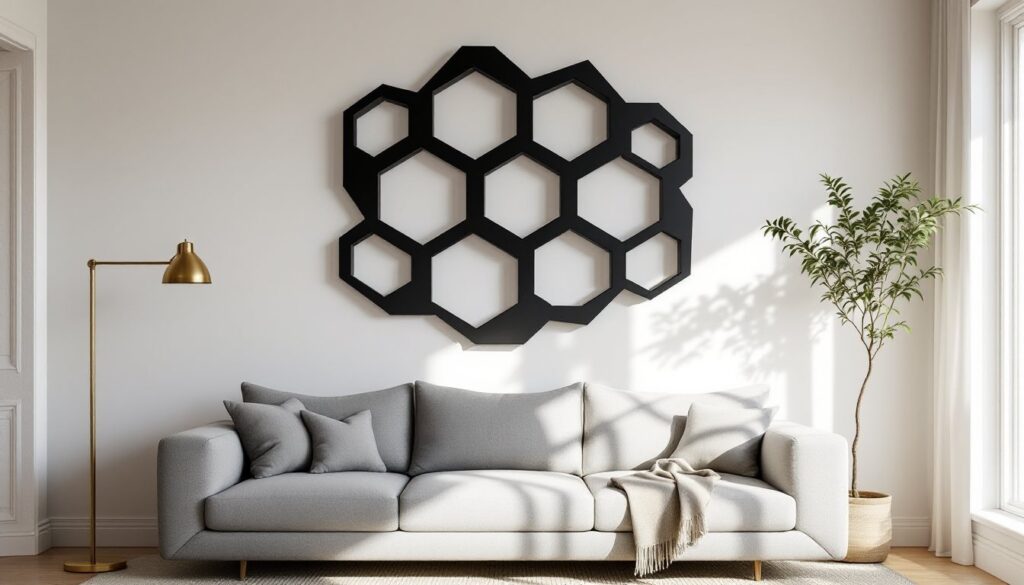
Geometric metal art includes hexagons, chevrons, intersecting circles, and asymmetrical grids. These work well in offices, dining rooms, and modern living spaces. Look for pieces with layered elements, panels set at different depths create shadow play that changes throughout the day.
Sunburst mirrors with metal rays are a classic choice for entryways and above mantels. The reflection adds light while the black metal frame keeps it grounded. Three-dimensional wire sculptures in abstract forms suit minimalist interiors and pair well with concrete, marble, and glass surfaces.
For a cohesive gallery wall, mix geometric metal pieces with framed black-and-white photography. Keep spacing consistent, 2 to 4 inches between pieces, to maintain visual rhythm. Avoid overcrowding: metal needs breathing room to showcase its structure.
Nature-Inspired and Botanical Pieces
Metal tree branches, leaf clusters, and botanical silhouettes bring organic shapes into spaces that lack greenery. These work particularly well in bathrooms, bedrooms, and covered outdoor areas. Powder-coated aluminum withstands moisture better than raw steel, which can develop surface rust in humid climates.
Laser-cut designs offer intricate detail, think delicate ferns, olive branches, or tropical palm fronds. Heavier forged pieces with hand-hammered leaves suit rustic or cottage-style homes. For farmhouse interiors, wrought iron cotton stems or wheat stalks tie into agricultural themes without feeling kitschy.
Animal motifs, horses, birds, deer, are popular in cabins and country homes. Choose pieces with clean silhouettes rather than overly detailed renderings, which can read as dated. A single large piece typically makes more impact than multiple small ones in this category.
How to Choose the Right Black Metal Wall Art for Your Space
Start with wall measurements. For a sofa or bed, the art should span two-thirds to three-quarters the width of the furniture. On blank walls, aim for pieces that fill 60-75% of the available vertical space to avoid the “floating postage stamp” effect.
Weight and mounting matter more than with canvas or paper art. Check the product specs, anything over 10 pounds needs wall anchors, not just nails. For drywall, use toggle bolts or molly bolts rated for the piece’s weight. On plaster or brick, a masonry bit and plastic anchors provide better hold. If the wall is load-bearing with accessible studs, screw directly into the framing lumber for maximum support.
Consider the room’s existing metals. Mixing black metal with brass, copper, or nickel creates intentional contrast. But if the space already has black hardware, light fixtures, or furniture legs, too much black metal can feel heavy. In that case, choose pieces with cut-out designs that let wall color show through, or mix in lighter materials like wood or rattan.
Scale appropriately. A 12-inch piece on a 10-foot wall will look lost. Conversely, an oversized sculptural piece in a small powder room can overwhelm. When in doubt, create a paper template of the dimensions and tape it to the wall before purchasing. Live with it for a day or two to see how it feels in different lighting.
Styling Tips: Displaying Black Metal Wall Decor Like a Pro
Hang at eye level, which is typically 57-60 inches from the floor to the center of the piece. In dining rooms where people are seated, drop that to 54-56 inches. Over furniture, leave 6-8 inches of clearance above the back edge to visually anchor the art to the piece below it.
For gallery walls, lay out the arrangement on the floor first. Start with the largest piece as your anchor, then build around it. Use painter’s tape on the wall to mark placement before hammering. A laser level ensures alignment across multiple pieces, eyeballing it leads to subtle slopes that read as unprofessional.
Layer metal with other textures. A black metal grid looks sharper against painted shiplap or textured wallpaper than flat drywall. In bedrooms, balance hard metal edges with soft textiles, linen headboards, velvet throw pillows, woven rugs. The contrast keeps the space from feeling cold.
Lighting makes a difference. Picture lights or track lighting angled at 30 degrees highlight the dimensionality of layered metal pieces. In rooms with only overhead lighting, choose pieces with open designs that won’t cast heavy shadows. Avoid placing glossy black metal directly opposite windows, afternoon sun can create harsh glare.
For renters or those who change decor frequently, use removable adhesive strips rated for the piece’s weight. They work on most painted walls and come off without damage. Test on an inconspicuous area first, especially on textured or older paint that might peel.
DIY Black Metal Wall Decor Projects to Try
Creating custom metal wall art requires specific tools, but several projects are accessible to confident DIYers with basic metalworking gear. Always wear safety glasses, work gloves, and hearing protection when cutting or grinding metal.
Rebar wall sculpture is a beginner-friendly project. Standard ½-inch rebar can be cut with a reciprocating saw and a metal-cutting blade or an angle grinder. Arrange pieces into geometric shapes, squares, triangles, or abstract clusters, and weld joints with a MIG welder. For those without welding equipment, cold weld epoxy creates bonds strong enough for wall-hung pieces under 5 pounds. Prime bare steel with rust-inhibiting primer before applying spray paint in matte black. This approach is common among living room DIY projects where custom dimensions matter.
Expanded metal panels offer visual interest without cutting. Buy 24-gauge expanded steel mesh from metal suppliers, it comes in 2×4-foot sheets for around $15-$30 depending on the pattern. Frame it with 1×2 poplar stained dark or painted black, using a brad nailer and construction adhesive. The mesh doesn’t need finishing if it’s already powder-coated, but raw steel should be cleaned with denatured alcohol and sealed. Inspiration from sites like Design Milk often features industrial materials used in modern residential contexts.
Salvaged metal assemblage works for those with access to scrap materials. Old fence finials, wrought iron brackets, and steel strapping can be arranged into wall art. Clean rust with a wire brush attachment on a drill, then seal with clear matte spray to preserve patina, or paint uniformly black. Mount components to a ½-inch plywood backer painted the same color as the wall so it disappears behind the metal. This method suits farmhouse and eclectic styles, and detailed tutorials appear on blogs like Making Manzanita.
Important safety notes: Cutting metal produces sharp edges, deburr all cuts with a metal file or grinder. Work in a well-ventilated area when spray painting or welding. If a project requires more than spot welding or involves pieces over 20 pounds, consult a professional welder or metal fabricator. Structural integrity matters when mounting heavy objects overhead.