Table of Contents
ToggleGolf wall decor does more than fill empty wall space, it brings personality, conversation, and a sense of personal passion into a home. Whether someone plays every weekend or just appreciates the elegance of the sport, themed decor offers a way to anchor a room’s design around something meaningful. Unlike generic art that rotates with trends, golf-themed pieces reflect a specific interest and can tie together a home office, den, garage workshop, or even a formal living room when chosen carefully. The key lies in selecting pieces that complement the existing architecture and color palette rather than fighting against them.
Key Takeaways
- Golf wall decor adds personality and meaning to any room by reflecting personal passion while complementing existing architecture and color palettes without requiring a complete redesign.
- Popular golf wall decor formats include vintage posters, three-dimensional sculptures, and shadow boxes—each serving different rooms and requiring specific mounting techniques for durability.
- Proper scaling, color coordination, and strategic placement above furniture or in gallery walls (with centers at 57-60 inches from the floor) ensure golf decor feels intentional rather than incidental.
- Three-dimensional golf art pieces require secure mounting into wall studs, with shadow boxes needing 2-4 inches of depth and adequate hardware to support 10-15 pound loads safely.
- DIY golf wall decor projects like vintage club shadow boxes, reclaimed wood signs, and golf ball display grids allow homeowners to customize pieces to exact dimensions and styles while reducing costs.
Why Golf Wall Decor Makes the Perfect Addition to Any Room
Golf wall decor works across a surprising range of interior styles. The sport’s history spans centuries, giving decorators access to vintage imagery, classic typography, and a built-in color palette of greens, whites, and earth tones that blend naturally into farmhouse, traditional, and even modern interiors.
For homeowners who already play, it’s a natural extension of their lifestyle. For those who don’t, golf imagery still carries cultural weight, it evokes leisure, craftsmanship, and outdoor landscapes. A well-chosen piece can anchor a room’s theme without requiring a total redesign.
From a practical standpoint, golf art tends to be less polarizing than abstract or overly personal photography. It’s specific enough to feel intentional but broad enough to appeal to guests. That balance makes it easier to commit to than, say, family portraits in a formal living room.
The sport’s association with precision and tradition also lends itself to well-crafted decor. Many golf-themed pieces, whether vintage posters, club displays, or sculptural elements, are designed with attention to detail that elevates them beyond novelty items. When someone invests in quality pieces, they’re adding layers of visual interest that can stand up to scrutiny.
Popular Types of Golf Wall Decor for Every Style
Golf decor spans a wide range of formats, from flat prints to three-dimensional installations. Understanding the options helps homeowners match their space’s needs with the right visual weight and material.
Vintage Golf Posters and Prints
Vintage golf posters draw from decades of tournament history, equipment advertising, and resort marketing. Original prints from the early-to-mid 20th century command high prices, but high-quality reproductions are widely available and often indistinguishable when framed properly.
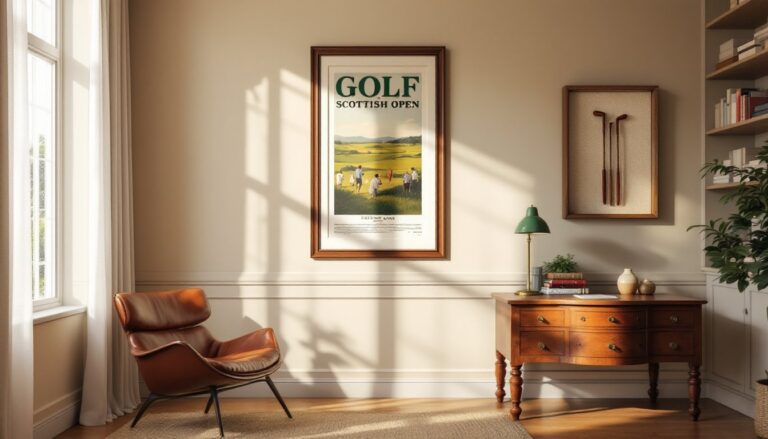
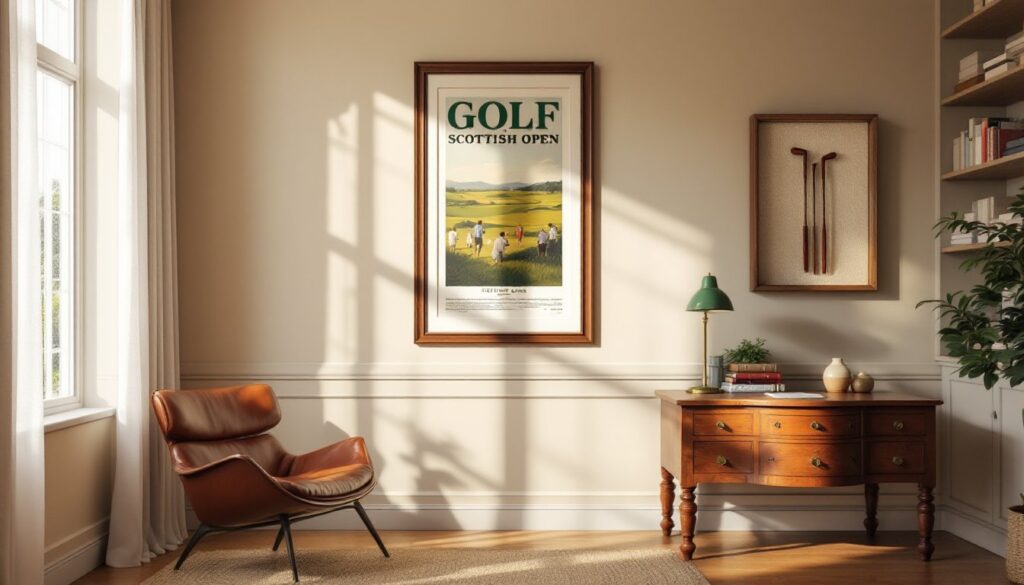
Look for prints with strong graphic design, bold typography, limited color palettes, and clear focal points. Posters from Scottish Open tournaments, St. Andrews courses, or classic American resort destinations like Pebble Beach carry built-in nostalgia. Archival-quality prints on acid-free paper prevent yellowing over time, especially in rooms with natural light.
Framing matters as much as the print itself. A 1-inch wood frame in walnut or oak complements vintage imagery without overpowering it. For a more modern look, black metal frames with white matting create contrast that pulls focus. Avoid plastic frames, they cheapen the presentation and often warp in humid environments like basements or bathrooms.
Matting adds depth. A 2-inch mat border around a 16×20-inch print gives breathing room and prevents the image from feeling cramped against the frame. Double matting, using a thin inner mat in a contrasting color, adds a subtle layer of sophistication.
Three-Dimensional Golf Art and Sculptures
Flat prints work well in bedrooms and offices, but three-dimensional pieces add texture to living rooms, entryways, and hallways. Options include shadow boxes displaying vintage clubs, metal sculptures of golfers mid-swing, or reclaimed wood signs with routed lettering.
Shadow boxes require depth, typically 2 to 4 inches, to accommodate golf clubs, balls, or tournament memorabilia. Mount them on wall studs using appropriate hardware: a box holding multiple clubs can weigh 10-15 pounds when fully loaded. Use a stud finder to locate 16-inch on-center framing, then secure with #8 wood screws at least 2 inches long.
Metal sculptures range from minimalist line drawings to detailed figurines. Powder-coated steel resists rust and holds up in garages or covered patios. When mounting metal art, check the back for pre-drilled holes or welded hanging brackets. If none exist, adhesive picture hanging strips rated for the sculpture’s weight can work on drywall, but screws into studs provide better long-term support.
Reclaimed wood signs bring warmth and texture, especially in spaces with existing wood trim or exposed beams. Look for pieces made from pallet wood or barn siding, the weathering adds character. These are lighter than shadow boxes but still benefit from anchoring into studs if they exceed 24 inches in width.
Choosing the Right Golf Wall Decor for Your Space
Selecting golf decor starts with understanding the room’s function and existing design language. A piece that works in a casual basement bar won’t necessarily fit a formal dining room.
Scale is critical. A 12×16-inch print disappears on a 10-foot wall, while a 40×60-inch canvas overwhelms a narrow hallway. As a general rule, wall art should occupy two-thirds to three-quarters of the available wall width in a grouping. For a single statement piece above a sofa or console table, aim for 50-75% of the furniture’s width.
Color coordination matters more than strict style matching. If the room features cool grays and blues, vintage posters with sepia tones may clash unless balanced by warmer wood frames or adjacent textiles. Golf imagery naturally skews green, which works well in rooms with neutral walls but can feel heavy in spaces already dominated by green upholstery or area rugs.
Consider the room’s activity level. High-traffic areas like hallways and mudrooms benefit from durable materials, metal or sealed wood rather than unprotected paper prints. UV-protective glass or acrylic prevents fading in rooms with south- or west-facing windows. Rooms like offices or bedrooms, where people spend extended time, can handle more intricate details and smaller text that rewards closer inspection.
Lighting affects perception. Track lighting or picture lights directed at wall art create drama, but they also generate heat. Keep halogen or incandescent bulbs at least 12 inches away from framed prints to prevent heat damage. LED picture lights run cooler and are safer for long-term installations.
For homeowners who enjoy experimenting with different looks, resources like accent wall techniques can provide additional strategies for making decor stand out without permanent commitment.
Creative Placement Ideas for Maximum Impact
Placement determines whether golf decor feels intentional or like an afterthought. Strategic positioning leverages sightlines, furniture arrangement, and architectural features.
Above furniture is the most common placement, over sofas, desks, or console tables. The bottom edge of the frame should sit 6 to 8 inches above the furniture top. This creates visual connection without crowding. For gallery walls, the center of the grouping should align with eye level, typically 57 to 60 inches from the floor.
Stairwell walls offer vertical real estate that’s often underused. Arrange multiple pieces in an ascending line that follows the stair angle. Maintain consistent spacing, 3 to 4 inches between frames, and use a laser level to ensure alignment. Stairwell installations require anchoring into studs or using toggle bolts rated for drywall if studs aren’t accessible.
Corner arrangements work well for three-dimensional pieces like club displays. A shadow box mounted in a corner draws the eye without blocking pathways. Pair it with a small side table or floor plant to create a vignette.
Unexpected spaces like powder rooms, laundry rooms, or above doorways add surprise without requiring major commitment. A single vintage poster in a half-bath becomes a conversation piece. Just ensure humidity won’t damage the materials, use sealed frames in moisture-prone areas.
Many designers featured in publications like Elle Decor emphasize the importance of layering decor elements rather than relying on a single focal point. Pairing golf art with complementary accessories, vintage books, brass desk lamps, or leather seating, creates depth.
For DIYers exploring broader design approaches, platforms like Addicted 2 Decorating showcase budget-friendly room transformations that demonstrate how thematic decor can anchor a space without requiring professional help.
DIY Golf Wall Decor Projects You Can Create at Home
Building custom golf decor allows homeowners to tailor pieces to exact dimensions, colors, and styles while keeping costs lower than retail.
Vintage Club Shadow Box: Start with a 2-inch-deep shadow box frame (available at craft stores or online). Sand and stain or paint the frame to match existing trim. Use picture hanging wire or sawtooth hangers on the back. Arrange vintage clubs, mashies, niblicks, or persimmon drivers work best, inside the box. Secure them with hot glue or small wood screws drilled through pre-drilled pilot holes to avoid splitting. Add a background of burlap or felt cut to size and stapled to the backing board for texture.
Reclaimed Wood Golf Sign: Cut 1×6 pine boards or pallet slats to desired length, 24 to 36 inches works well for most walls. Sand all surfaces with 120-grit sandpaper, then 150-grit for smoothness. Apply wood stain or chalk paint and let dry. Use a vinyl stencil (cut with a Cricut or Silhouette machine, or purchased) to mask out lettering like “Golf Club,” “19th Hole,” or a favorite course name. Paint over the stencil with acrylic craft paint, then peel away once dry. Seal with matte polyurethane to protect the finish. Mount using keyhole hangers or D-rings screwed into the back.
Golf Ball Display Grid: Build a simple wall-mounted grid to showcase collected golf balls from memorable rounds. Cut a piece of 1/2-inch plywood to the desired size (e.g., 18×24 inches). Drill 1.5-inch diameter holes using a spade bit in evenly spaced rows, 4 inches apart works well. Sand all edges smooth. Paint or stain the plywood, then mount to the wall using L-brackets or French cleats for a flush, secure fit. Insert golf balls into the holes. This project requires a drill, spade bit set, and basic measuring tools.
Craft-focused sites like The Spruce Crafts offer additional DIY tutorials for homeowners looking to expand their skills with woodworking, stenciling, or mixed-media projects.
Safety note: Always wear safety glasses when drilling or cutting wood. Use a dust mask when sanding, especially with reclaimed materials that may contain old paint or chemicals. Work in a ventilated area and keep a fire extinguisher nearby when using power tools.
DIY projects also allow for customization that retail pieces can’t match. Homeowners can incorporate team colors, specific course names, or personal tournament dates into designs, making the decor truly one-of-a-kind.