Table of Contents
ToggleTransforming a child’s room into a space that’s both charming and functional doesn’t require a design degree or unlimited budget. Winnie the Pooh wall decor delivers a gentle, nostalgic aesthetic that works in nurseries, playrooms, and even shared bedrooms. The Hundred Acre Wood’s characters have endured for nearly a century, offering parents a theme that won’t feel dated in two years. Unlike trendy motifs that fade quickly, Pooh’s simple palette, honey golds, soft greens, robin’s-egg blues, coordinates easily with standard nursery furniture and grows with the child. This guide walks through product options, DIY techniques, and styling strategies to help anyone create a Pooh-themed space that looks polished, not cluttered.
Key Takeaways
- Winnie the Pooh wall decor combines timeless appeal with practical durability, featuring a neutral color palette of honey golds, soft greens, and robin’s-egg blues that coordinates with any nursery furniture and grows with your child.
- Multiple Winnie the Pooh wall decor options exist to suit different budgets and preferences, including vinyl wall decals for quick application, canvas prints for a gallery look, and DIY projects like stenciled murals and hand-painted designs.
- Proper installation safety is critical in nurseries—use polycarbonate glazing instead of glass, mount heavy frames into wall studs with appropriate anchors, and avoid placing heavy artwork directly above cribs where children sleep.
- Styling restraint prevents a cluttered appearance; limit decor to three to five pieces per room with one large focal element and smaller accents to let each Pooh-themed piece stand out.
- Warm LED bulbs (2700-3000K) enhance Pooh’s honey and amber tones, while the cross-generational appeal of classic Winnie the Pooh characters makes this theme a sentimental choice that won’t feel dated in a few years.
- DIY Winnie the Pooh wall decor projects like wood signs, fabric wall hangings, and shelves with themed brackets add personality while keeping costs reasonable compared to store-bought options.
Why Winnie the Pooh Remains a Beloved Decor Theme
Winnie the Pooh’s staying power comes from its universal simplicity. A. A. Milne’s characters embody gentle lessons, friendship, curiosity, kindness, without the overstimulation of modern screen-based franchises. The color scheme is naturally neutral, avoiding the garish primaries common in licensed children’s decor. This makes it easier to coordinate with existing paint, flooring, and furniture.
From a practical standpoint, Pooh-themed decor ages well. A toddler who loves Pooh and Piglet at age two may still appreciate the whimsy at age seven, especially if the room incorporates classic storybook illustrations rather than cartoon adaptations. Parents can layer in educational elements, alphabet prints featuring Owl, growth charts with Tigger, that serve dual purposes.
The theme also appeals to multiple generations. Grandparents who grew up with E. H. Shepard’s original pen-and-ink drawings feel nostalgic, while today’s parents may have childhood memories of Disney’s animated films. This cross-generational recognition makes Pooh a safe, sentimental choice for baby showers, nursery reveals, and family heirlooms.
Finally, the licensing is mature and widely available. Unlike niche characters that require custom orders, Winnie the Pooh products appear in mainstream retailers, craft stores, and online marketplaces. This accessibility keeps costs reasonable and simplifies the hunt for matching pieces.
Types of Winnie the Pooh Wall Decor to Consider
Wall Decals and Removable Stickers
Vinyl wall decals are the fastest route to a Pooh-themed room. They adhere to painted drywall, won’t damage most finishes when removed, and require no special tools. Look for decals printed with eco-solvent or latex inks, they’re low-VOC and safer for nurseries.
Application is straightforward: clean the wall with a damp cloth, let it dry completely, then apply the decal using the included transfer tape. Work from center to edges, smoothing with a squeegee or credit card to eliminate air bubbles. If a bubble persists, prick it with a pin and press flat.
Quality varies. Cheaper decals may curl at the edges or lose adhesion in humid climates. Check reviews for durability and ease of removal. Some parents report that budget decals leave a slight residue on semi-gloss paint: test on an inconspicuous spot first.
Removable stickers differ slightly, they’re smaller, repositionable, and often sold in themed sets (Pooh with honeypot, Eeyore with balloon). They’re ideal for renters or anyone planning to redecorate frequently. Both decals and stickers work best on smooth, flat surfaces: textured or knockdown drywall may prevent full adhesion.
Canvas Prints and Framed Art
Canvas prints offer a more permanent, gallery-style look. Stretched canvas, where the print wraps around a wooden frame, hangs flush against the wall and needs no additional framing. Sizes range from 8×10 inches for accent pieces to 24×36 inches for statement walls.
When selecting prints, pay attention to image resolution. Low-quality files will pixelate when enlarged. Look for listings that specify 300 DPI or higher. Giclee prints on archival canvas last longer and resist fading, especially in rooms with direct sunlight.
Framed art under glass adds a traditional touch. Many homeowners who appreciate budget home makeovers find that simple wood or metal frames in white, natural oak, or matte black coordinate well with nursery palettes. Hang frames at eye level for an adult, typically 57-60 inches from the floor to the center of the artwork. In a nursery, consider a gallery wall arrangement above the crib (securely anchored with drywall anchors rated for the combined weight) or near the changing station where parents spend significant time.
For safety, use polycarbonate glazing instead of glass in frames hung above cribs or play areas. It’s shatter-resistant and lighter, reducing the risk if a frame falls.
DIY Winnie the Pooh Wall Decor Ideas
Handmade decor adds personality and keeps budgets in check. One popular approach: stenciled murals. Purchase or cut a Pooh stencil from Mylar sheets (more durable than cardboard). Tape the stencil flat against the wall, then stipple acrylic craft paint with a foam pouncer. Work in thin layers to prevent bleed-under. Remove the stencil while the paint is still wet for crisp edges.
For a softer look, try a hand-painted tree silhouette with Pooh and friends perched on branches. Sketch the design lightly in pencil, then paint with low-VOC interior latex in coordinating colors. If freehand painting feels intimidating, use a projector to trace an image onto the wall. Many DIYers following painting tutorials find this technique forgiving and effective.
Wood sign projects work well in farmhouse or rustic-themed nurseries. Cut a piece of 1×6 or 1×8 pine to the desired length (a 24-inch sign fits nicely above a dresser). Sand smooth with 120-grit sandpaper, then apply a coat of primer if painting. Stencil or hand-letter a Pooh quote, “Sometimes the smallest things take up the most room in your heart”, using acrylic paint or a paint marker. Seal with matte polyurethane for durability. Mount with sawtooth hangers or French cleats rated for the sign’s weight.
Fabric wall hangings offer texture without nails. Stretch printed Pooh fabric over canvas stretcher bars (available at craft stores in standard sizes). Staple the fabric to the back of the frame with a staple gun, pulling taut to avoid wrinkles. Hang using the same methods as canvas prints.
Another option: shadow boxes displaying vintage Pooh books, plush toys, or ceramic figurines. Use a picture hanging kit with wire and D-rings for items over two pounds. Ensure boxes are mounted into wall studs or with toggle anchors rated for at least three times the display’s weight, nursery safety codes don’t mess around.
For those comfortable with power tools, a shelf with Pooh-themed brackets adds both decor and function. Cut a shelf from 3/4-inch plywood or pine, sand edges, and finish with paint or stain. Install with L-brackets or floating shelf hardware anchored into studs. Display Pooh books, stuffed animals, or framed photos.
How to Style Winnie the Pooh Wall Decor in Different Rooms
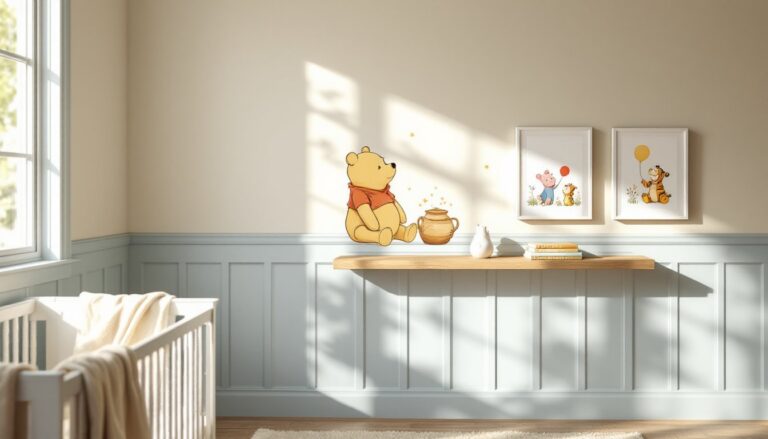
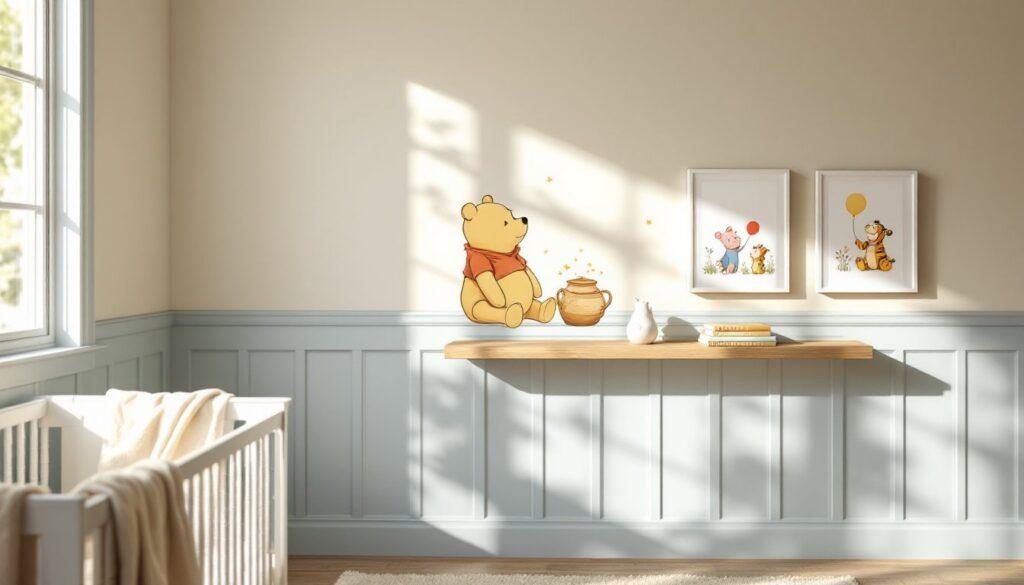
Nurseries benefit from a focal wall behind the crib. A large decal or mural draws the eye without overwhelming the space. Keep the remaining walls neutral, Benjamin Moore’s Simply White or Sherwin-Williams’ Agreeable Gray pair well with Pooh’s warm tones. Add floating shelves for books and a framed quote near the changing table.
In toddler bedrooms, balance decor with function. A growth chart decal featuring Tigger serves double duty. Use canvas prints in a grid layout above the bed, three 12×12-inch squares create symmetry without busy-ness. Avoid placing heavy frames directly over the bed: if the child jumps or climbs, displaced art becomes a hazard.
Playrooms can handle more visual energy. Create a reading nook with a tree mural on one wall and floor cushions beneath. Hang a series of small framed prints in a horizontal line at toddler eye level, around 36 inches from the floor, so children engage with the art. Incorporate interactive elements like a felt board or magnetic wall section where kids can arrange Pooh characters.
For shared bedrooms, use Pooh decor to define one child’s area without dividing the room with furniture. A decal or canvas set on one side establishes territory while maintaining openness. Coordinate colors with the sibling’s theme, if the other child prefers blue, choose Pooh art with Eeyore or incorporate more sky tones.
Lighting affects how colors read. Warm LED bulbs (2700-3000K) enhance honey and amber tones in Pooh decor. Cooler bulbs (4000K+) can wash out the palette. Test bulbs before committing to a full room’s worth.
Finally, resist the urge to cover every surface. Three to five decor pieces per room, one large focal element and several smaller accents, creates cohesion without clutter. Inspired by the approach seen in DIY decor projects, this restraint lets each piece stand out and simplifies future updates as the child’s tastes evolve.
Conclusion
Winnie the Pooh wall decor works because it’s timeless, accessible, and adaptable. Whether someone opts for peel-and-stick convenience or a weekend DIY project, the result is a room that feels intentional and warm. The key is balancing nostalgia with restraint, letting Pooh and friends enhance the space without dominating it. With proper prep, safe installation, and thoughtful styling, a Pooh-themed room can grow alongside a child for years.