Table of Contents
ToggleStitch-based wall decor has carved out a permanent place in modern home design, blending traditional textile techniques with fresh, contemporary aesthetics. From embroidered hoops to oversized macramé panels, these tactile pieces add warmth, texture, and visual interest to rooms that might otherwise feel flat or impersonal. Unlike mass-produced prints, stitch wall art carries a handmade quality, whether store-bought or DIY, that brings character to living rooms, bedrooms, and hallways. For homeowners looking to move beyond the standard gallery wall, textile-based decor offers a practical, budget-friendly way to make a statement without major renovation work.
Key Takeaways
- Stitch wall decor brings handmade warmth and three-dimensional texture to any room, making it an ideal alternative to flat printed art that adapts to modern, farmhouse, mid-century, and eclectic design styles.
- Scale and proportion are critical when selecting stitch wall decor; aim for pieces spanning two-thirds to three-quarters of the furniture width for focal walls, and choose vertical pieces for narrow spaces like hallways and bathrooms.
- Popular stitch wall decor options include embroidery hoops, macramé hangings, woven tapestries, and punch needle art, each ranging from budget-friendly DIY projects to investment pieces from fiber artists.
- Strategic placement above sofas and beds, flanking windows, or integrated into gallery walls maximizes impact, while indirect lighting at 30- to 45-degree angles emphasizes the dimensional quality of textile work.
- Beginners can start with simple embroidery hoop projects using basic stitches and free templates, while intermediate makers can create macramé hangings or advance to punch needle for high-impact textured pieces.
What Is Stitch Wall Decor and Why It’s Trending
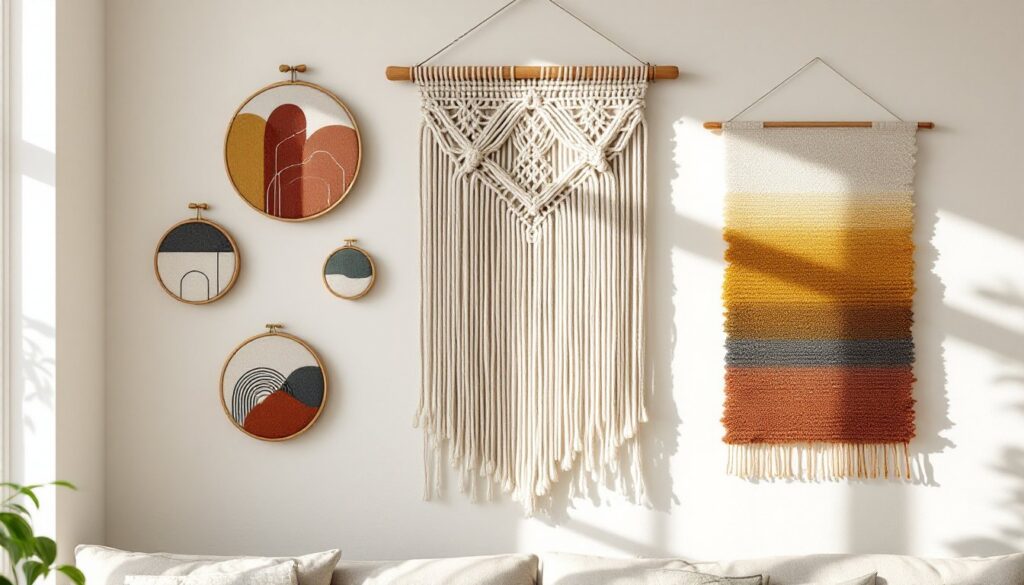
Stitch wall decor refers to any decorative wall piece created using textile techniques, embroidery, cross-stitch, needlepoint, macramé, weaving, or fabric manipulation. These pieces are typically displayed in hoops, frames, or hung directly on the wall as tapestries or fiber art.
The current surge in popularity ties back to several factors. First, the pandemic reignited interest in tactile, slow-craft hobbies, and many of those beginners graduated to displaying their work. Second, the shift away from sterile minimalism has made room for texture-rich, artisan-style decor. Third, social media platforms spotlight fiber artists whose large-scale installations and detailed needlework draw serious engagement.
Unlike printed posters or canvas prints, stitch decor introduces three-dimensional texture. Light plays differently across woven fibers and embroidered threads, creating visual depth that changes throughout the day. This makes stitch pieces particularly effective in spaces with good natural light or layered artificial lighting.
Stitch wall decor also bridges the gap between traditional craft and modern design. A mid-century home can feature a geometric macramé panel: a farmhouse-style room can display a vintage-inspired sampler. The medium adapts to nearly any aesthetic without feeling forced.
Popular Types of Stitch Wall Decor for Every Style
Embroidery Hoops and Framed Cross-Stitch Art
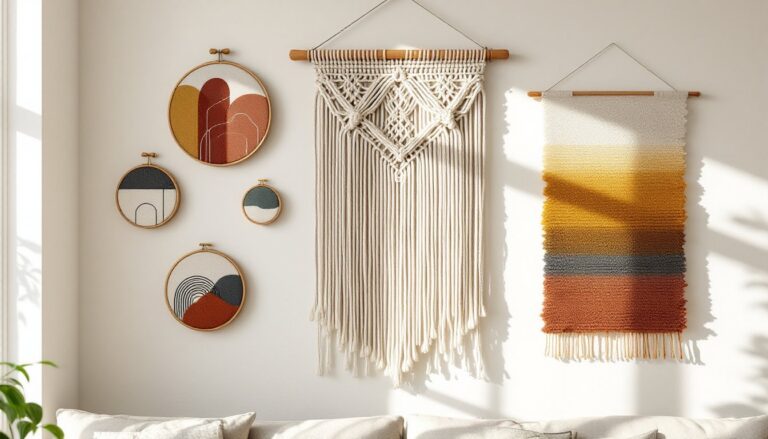
Embroidery hoops, ranging from 4-inch samplers to 24-inch statement pieces, remain one of the most accessible entry points into stitch decor. The hoop itself doubles as the frame, keeping costs low and installation simple. A single screw or picture hook supports most hoop pieces without wall anchors.
Cross-stitch, once associated with dated floral samplers, has evolved into bold, graphic art. Contemporary patterns include typography, abstract geometry, botanical line drawings, and even pixel art-inspired designs. When professionally framed under glass, cross-stitch pieces gain a polished, gallery-quality look that works in formal spaces.
For high-impact display, cluster multiple hoops of varying sizes in an asymmetric arrangement. Use 3 to 7 pieces for visual balance without overcrowding. Keep the color palette cohesive, either monochromatic threads on varied fabric, or a shared accent color across different designs.
Macramé Wall Hangings and Woven Tapestries
Macramé wall hangings, crafted from knotted cotton, jute, or synthetic cord, range from minimalist single-strand pieces to elaborate designs incorporating wooden dowels, beads, and dyed fibers. A typical living room piece measures 24 to 36 inches wide and hangs from a dowel rod or driftwood branch.
These work particularly well in spaces needing softness: above upholstered headboards, flanking windows, or breaking up large expanses of painted drywall. The natural fiber texture complements wood furniture, linen textiles, and matte paint finishes.
Woven tapestries, made on looms using techniques like tabby weave, rya knotting, or soumak, offer more color variation and pattern complexity than macramé. Tapestries can incorporate metallic threads, gradient dyes, or mixed materials like wool and cotton. Expect prices to scale with size and complexity: a handwoven 36×48-inch tapestry from an independent fiber artist typically runs $200 to $600, depending on materials and labor.
When selecting woven pieces, consider the surrounding wall color. High-contrast combinations (charcoal tapestry on white walls, cream macramé on navy) create drama, while tonal pairings (natural jute on beige) add subtle texture without competing for attention.
How to Choose the Right Stitch Wall Decor for Your Space
Start with scale. A common mistake is choosing pieces too small for the wall. For a focal-point installation above a sofa or bed, aim for artwork that spans two-thirds to three-quarters the width of the furniture below. A 72-inch sofa pairs well with a 48- to 54-inch-wide tapestry or a multi-hoop arrangement spanning that distance.
In narrow spaces like hallways or bathrooms, vertical pieces work better than wide ones. A tall, slender macramé hanging (12×36 inches) visually extends ceiling height without overwhelming limited floor space.
Consider color temperature and existing finishes. Warm-toned fibers (rust, terracotta, mustard, natural jute) complement honey oak, brass fixtures, and warm white paint. Cool-toned threads (charcoal, slate blue, sage green) pair with chrome hardware, walnut furniture, and crisp white or gray walls.
Texture density matters in rooms with heavy or minimal existing texture. A room full of smooth surfaces, painted drywall, leather furniture, polished concrete, benefits from high-texture pieces like chunky woven tapestries or rya knot designs. Rooms already rich in texture (exposed brick, shiplap, patterned upholstery) call for simpler stitch work: fine cross-stitch, minimal macramé, or line-based embroidery.
Practical concerns: Avoid placing delicate stitch work in high-humidity areas like bathrooms unless the piece is sealed or made from synthetic, moisture-resistant fibers. Natural cotton and wool can develop mildew in damp conditions. For homes with pets or young children, mount pieces above 48 inches to keep them out of reach of curious hands and paws.
DIY Stitch Wall Decor Projects to Try at Home
Beginner Project: Embroidery Hoop Art
Materials needed:
- Embroidery hoop (8 to 10 inches for a first project)
- Cotton or linen fabric (quilting cotton works: linen offers more texture)
- Embroidery floss in 3 to 5 colors
- Embroidery needles (size 7 or 8)
- Water-soluble fabric pen for pattern transfer
- Scissors
Start with a simple geometric or botanical pattern. Many home crafting projects offer free downloadable templates for beginners. Stretch the fabric taut in the hoop, trace the pattern, and use basic stitches, backstitch for outlines, satin stitch for filled areas, French knots for texture. Once complete, trim excess fabric from the back, leaving 1 inch beyond the hoop edge, and secure with fabric glue or a running stitch.
For hanging, either leave the hoop hardware exposed for a casual look or attach a small ribbon loop to the top screw.
Intermediate Project: Simple Macramé Wall Hanging
Materials needed:
- 3mm to 5mm cotton cord (approximately 200 feet for a 24-inch-wide piece)
- Wooden dowel or branch (24 to 30 inches long, sanded smooth)
- Scissors
- Tape measure
Cut 16 to 20 strands of cord, each 10 feet long. Fold each in half and attach to the dowel using a lark’s head knot. Work downward using square knots in rows, spacing them evenly to create a grid pattern. For fringe, leave the bottom 8 to 12 inches unknotted and trim to desired length.
This project requires no special tools beyond scissors and steady hands. Expect 3 to 5 hours of work for a first attempt. Many budget home makeovers incorporate similar DIY textile pieces to add custom detail without the cost of commissioned art.
Advanced Project: Punch Needle Wall Hanging
Punch needle creates a looped, textured surface similar to a low-pile rug. You’ll need a punch needle tool, monk’s cloth fabric, an embroidery hoop or gripper frame, and yarn suitable for the needle size. Punch needle works best with bold, simple shapes, abstract color blocks, oversized florals, or typographic designs.
Work from the back of the fabric, punching loops to a consistent depth (typically 1/4 to 1/2 inch). The front side reveals the textured loops. Once complete, trim the fabric, apply fabric glue around the edges to prevent fraying, and mount on a wooden frame or stretch over canvas.
This technique produces high-impact pieces quickly compared to traditional embroidery. A 12×12-inch design can be completed in 4 to 6 hours.
Where to Display Stitch Wall Decor for Maximum Impact
Above the Bed or Sofa
This is the most common placement, and for good reason. The wall space above these large furniture pieces typically needs a focal point. A wide macramé panel or a trio of embroidery hoops centered above a bed anchors the room and draws the eye upward, which visually expands ceiling height.
Maintain proportion: leave 6 to 12 inches between the top of the headboard or sofa and the bottom edge of the wall decor. This prevents the piece from appearing to float or sit too heavily on the furniture.
Flanking Windows or Doorways
Vertical stitch pieces work beautifully flanking architectural features. Two matching macramé hangers on either side of a window add symmetry and frame the view without blocking light. This approach works in dining rooms, entryways, and bedrooms where balanced design feels appropriate.
For asymmetric styles, use a single large piece to one side of a doorway or window, balanced by furniture or a tall plant on the opposite side.
Gallery Wall Integration
Mixing stitch work with framed prints, mirrors, and small shelves creates a layered, collected-over-time aesthetic. The texture contrast between flat prints and dimensional fiber art adds visual interest. When planning a gallery wall, lay out the arrangement on the floor first, keeping 2 to 4 inches between pieces for breathing room.
Some DIY home decor projects emphasize mixing media, combining painted canvases, vintage frames, and handmade textiles for a curated, non-matching look that still feels cohesive.
Unexpected Spaces
Don’t overlook smaller walls: the space above a bathroom towel rack, a narrow hallway, or the wall beside a staircase. A single embroidery hoop or small macramé piece turns these overlooked areas into intentional design moments.
In kitchens, consider a small cross-stitch sampler with botanical or food-related motifs in a shadow box frame to protect it from grease and moisture. Placement should be away from the stove, aim for areas near the dining nook or open shelving.
Lighting Considerations
Fiber art benefits from indirect lighting. Direct, harsh light can wash out subtle color variations and flatten texture. Install wall sconces aimed upward or downward, or use track lighting positioned at a 30- to 45-degree angle to graze across the surface, emphasizing the dimensional quality of the fibers.
Avoid placing valuable or delicate stitch work in direct sunlight. UV exposure fades dyes over time, particularly natural plant-based dyes and certain synthetic threads. If a sunny wall is your only option, consider UV-filtering window film or reserve that spot for pieces made with colorfast materials.
For renters or those hesitant to put multiple holes in walls, consider leaning large framed pieces on mantels or wide shelving, or using removable adhesive hooks rated for the weight of the piece. Most embroidery hoops under 12 inches weigh less than 1 pound and work with standard picture-hanging strips.