Table of Contents
ToggleHigh ceilings are a blessing, until you’re staring at a towering blank wall wondering how to fill it without making the room look unbalanced. Tall wall decor isn’t just about scaling up a regular piece of art: it’s about proportion, visual weight, and choosing the right installation method so nothing ends up crashing down at 2 a.m.
Whether dealing with vaulted ceilings, stairwell walls, or two-story entryways, the right decor creates a focal point that draws the eye up and makes the space feel intentional. This guide covers what works, how to choose it, and, most importantly, how to hang it safely.
Key Takeaways
- Tall wall decor should occupy two-thirds to three-quarters of vertical space on walls 10-14 feet high to create visual balance without overwhelming the room.
- Oversized art, vertical gallery walls, and wooden accent pieces are the most effective types of tall wall decor for filling large vertical spaces proportionally.
- Always identify wall studs and use appropriate hardware rated for your decor’s weight plus a 50% safety margin to prevent tall wall installations from falling.
- Strong horizontal lines, bold shapes, and high-contrast images work better for tall wall decor viewed from angles or below, such as in entryways and staircases.
- French cleats and D-ring mounting systems provide superior control and weight distribution for tall pieces over 50 pounds compared to standard hanging wire.
- Budget-friendly tall wall decor options include wooden plank accent walls, peel-and-stick wallpaper panels, DIY macramé hangings, and repurposed architectural salvage.
Why Tall Wall Decor Makes a Statement in Your Home
Tall walls present a unique challenge: leave them bare, and the room feels unfinished. Hang something too small, and it looks lost. The right tall wall decor solves both problems by filling vertical space in proportion to the room’s scale.
High walls are common in open-concept living rooms, entryways with vaulted ceilings, and above staircases. These spaces benefit from vertical elements that anchor the room and prevent the “bowling alley” effect where the eye has nowhere to land. A well-placed tall piece creates visual balance, especially in rooms with high ceilings but standard furniture heights.
From a design perspective, tall decor emphasizes architectural features rather than fighting them. It also offers flexibility, vertical arrangements can make a room feel taller, while oversized single pieces add drama without clutter. The key is matching the scale to the wall and surrounding elements, not just filling space for the sake of it.
Best Types of Tall Wall Decor for Different Spaces
Choosing the right type depends on the room’s function, wall height, and the look being pursued. Not every option works in every space.
Oversized Art and Canvas Prints
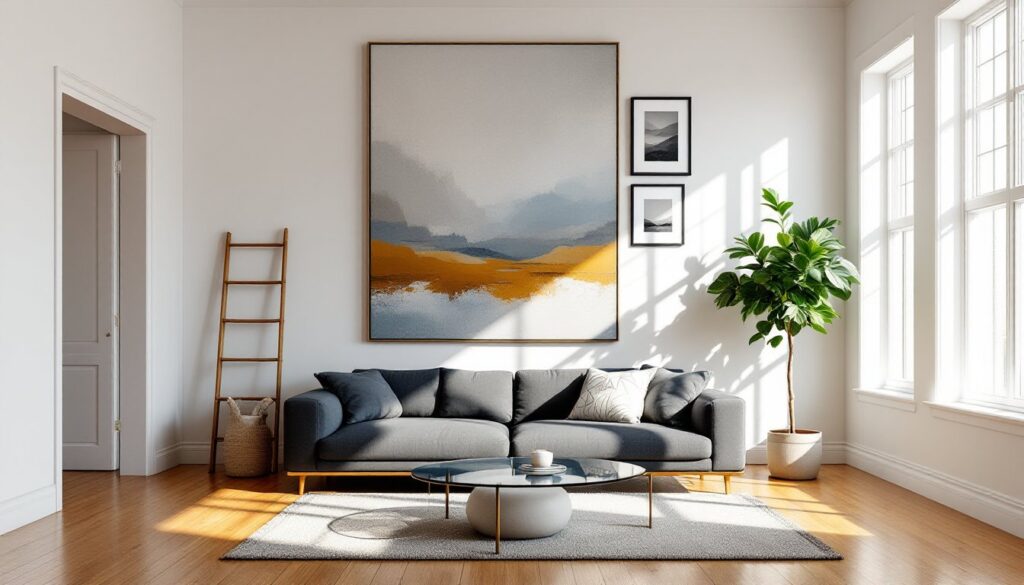
Oversized canvas prints and framed art are the most straightforward option for tall walls. Look for pieces at least 48 to 72 inches tall for walls 10 to 14 feet high. Canvas is lightweight, which simplifies installation, but quality matters, cheap prints fade and sag over time.
Wood-framed canvas or metal prints hold up better in high-traffic areas. For modern or industrial spaces, consider metal prints mounted on standoffs, which create a floating effect. In traditional homes, large oil paintings or mixed-media pieces in ornate frames add weight and sophistication.
When selecting oversized art, pay attention to color palette. A piece with too many competing tones can overwhelm a room, while a cohesive palette ties the space together. Homeowners often overlook this and end up with art that technically fits but visually clashes.
Vertical Gallery Walls and Photo Collages
Gallery walls arranged vertically work well when a single piece feels too stark. This approach is ideal for stairwells or narrow accent walls where width is limited but height is abundant.
Plan the layout on the floor first. Use a mix of frame sizes, but keep a consistent matting style or frame finish to avoid a chaotic look. For a balanced vertical gallery, start with a central anchor piece (usually the largest) and build around it with smaller frames in odd numbers, 3, 5, or 7 pieces total.
Spacing matters. Keep 2 to 3 inches between frames for a cohesive look. Too tight, and it feels cluttered: too wide, and the pieces lose connection. Use painter’s tape on the wall to mock up placement before driving nails.
Photo collages offer a personal touch, but avoid mixing too many print finishes (matte, glossy, canvas) in one wall. Stick to one or two finishes for consistency. For farmhouse or rustic spaces, wooden ladder-style collage frames create height without requiring multiple nail holes.
How to Choose the Right Tall Wall Decor for Your Room
Selecting tall wall decor isn’t just about aesthetics, it’s about proportion, function, and structural reality.
Measure the wall first. For walls 10 to 12 feet tall, decor should occupy roughly two-thirds to three-quarters of the vertical space. Leave breathing room at the top and bottom: a piece that goes floor-to-ceiling reads as forced.
Consider sightlines. In entryways and staircases, viewers often see the decor from an angle or below. Art with strong horizontal lines or small details gets lost. Bold shapes, high-contrast images, or vertical patterns work better.
Match the room’s purpose. Living rooms and dining areas can handle statement pieces with bold color. Bedrooms and hallways benefit from calmer, neutral tones. Bathrooms and kitchens, if dealing with tall walls in open-plan layouts, need moisture-resistant materials like sealed wood, metal, or acrylic.
Wall material matters. Drywall over studs is standard, but tall walls in older homes may have plaster and lath, which requires different anchors. Brick, stone, or concrete accent walls need masonry anchors, not standard drywall screws. Ignoring this is how heavy decor ends up on the floor.
Weight limits are real. A standard drywall anchor holds 20 to 50 pounds depending on type. Anything heavier requires mounting into a stud with wood screws or using toggle bolts rated for the load. Don’t guess, check the decor’s weight before buying hardware.
Creative DIY Tall Wall Decor Ideas on a Budget
High-impact tall decor doesn’t require a designer budget. A few materials and basic tools get the job done.
Wooden plank accent walls create vertical interest without art. Use 1×6 or 1×8 pine boards (actual dimensions: ¾” × 5½” or ¾” × 7¼”) stained or painted and mounted vertically with construction adhesive and finishing nails. This works well behind furniture like beds or sofas, adding height and texture. For a farmhouse look, whitewash or distress the wood. Modern spaces benefit from uniform dark stain.
Fabric or wallpaper panels offer a low-commitment option. Stretch bold fabric over a lightweight wooden frame (build it from 1×2 furring strips), or adhere peel-and-stick wallpaper to a piece of ¼-inch plywood cut to size. This approach is renter-friendly and easily removable.
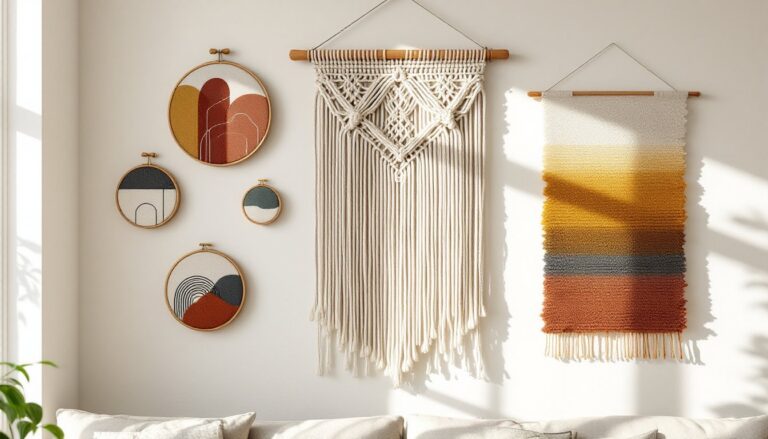
DIY macramé or woven wall hangings suit boho or coastal interiors. Use cotton rope (⅛” to ½” diameter) on a wooden dowel. Tutorials are abundant, and materials run under $30 for a piece 4 to 5 feet tall.
Large-scale stenciling or hand-painted murals work for confident DIYers. Use a projector to trace a design onto the wall, then paint with latex or acrylic interior paint. Seal with matte varnish for durability. This method shines in kids’ rooms, staircases, or accent wall ideas where bold pattern is welcome.
Repurposed architectural salvage, old shutters, window frames, or barn doors, adds character when mounted vertically. Sand, prime, and seal before hanging to prevent splinters and finish degradation. Expect to use heavy-duty D-rings and wall anchors rated for at least 50 pounds.
Installation Tips for Hanging Tall Wall Decor Safely
Improper installation is the leading cause of wall decor failure. Tall pieces amplify the risk.
Use a stud finder. For anything over 20 pounds, mount directly into wall studs (typically spaced 16 inches on center). Mark stud locations with painter’s tape before measuring.
Choose the right hardware. For drywall-only mounting, use toggle bolts or heavy-duty anchors rated for the decor’s weight plus a 50% safety margin. For wood studs, #8 or #10 wood screws at least 2½ inches long provide secure hold. Masonry walls need tapcon screws or sleeve anchors.
Level and plumb matter. A tall piece that’s even slightly off-level is obvious from across the room. Use a 4-foot or 6-foot level (not a short torpedo level) and double-check plumb with a straightedge. For gallery walls, a laser level saves time and frustration.
Hanging wire vs. D-rings. Wire is common but sags with heavy pieces, making precise leveling harder. D-rings or French cleats offer more control. French cleats, a two-part interlocking system cut from ¾-inch plywood beveled at 45 degrees, distribute weight evenly and are ideal for pieces over 50 pounds.
Safety first. Wear safety glasses when drilling overhead. Use a stepladder with a stabilizer bar, not a chair or stack of boxes. For tall installations above stairs, a multi-position ladder or scaffolding is safer than leaning.
Get help. Hanging pieces over 6 feet tall solo is a recipe for dropped art and dented drywall. A second person steadies the piece while the first measures and fastens.
Design experts at publications like House Beautiful and Elle Decor frequently emphasize proper installation as critical to both safety and aesthetics. DIY enthusiasts at Addicted 2 Decorating also document real-world installation challenges and solutions worth reviewing before tackling a tall wall project.