Table of Contents
ToggleVintage bedroom decor offers more than just aesthetics, it delivers character, warmth, and a sense of history that new furniture simply can’t replicate. Whether someone’s drawn to the elegant curves of Victorian pieces, the streamlined forms of mid-century design, or the romantic details of cottage-style bedrooms, creating a retro-inspired space requires understanding eras, materials, and authentic finishes. This guide walks through the essential elements, from choosing the right period to sourcing furniture, selecting paint colors, and layering textiles that bring timeless charm to any bedroom.
Key Takeaways
- Authentic vintage bedroom decor features honest wear and construction details like dovetail joints and solid wood frames that distinguish genuine pieces from mass-market reproductions.
- Choosing a single dominant era—Victorian, Art Deco, mid-century modern, or cottage style—creates cohesion and prevents a cluttered, mismatched appearance in your vintage bedroom.
- Period-accurate color palettes, such as deep jewel tones for Victorian or muted earth tones for mid-century, establish authenticity and set the room’s mood.
- Layering vintage textiles including quilts, chenille bedspreads, and period-appropriate linens adds warmth and genuine character that transforms the entire space.
- Quality anchor pieces like solid wood bed frames, dressers with dovetail joints, and period-appropriate lighting fixtures form the foundation of successful vintage bedroom design.
- Finishing touches such as vintage mirrors, framed prints, and carefully selected accessories complete the vintage aesthetic without over-cluttering the room.
What Defines Vintage Bedroom Decor?
Vintage decor refers to items and design styles typically 20 to 100 years old, distinguishing them from true antiques (100+ years) and retro reproductions. The term encompasses various periods, Victorian (1837–1901), Art Deco (1920s–1930s), mid-century modern (1945–1969), and more.
Authentic vintage pieces show honest wear: patina on brass hardware, slight crazing in painted finishes, or minor veneer separation at edges. These imperfections add character, not defects. Reproduction furniture mimics the look but lacks the construction quality, dovetail joints, solid wood frames, and hand-applied finishes, found in original pieces.
Key indicators of genuine vintage furniture include maker’s marks, construction techniques (mortise-and-tenon joints, hand-cut dovetails), and period-appropriate materials. A 1950s dresser might feature Bakelite pulls and plywood backing, while a 1920s vanity shows solid hardwood and beveled mirror edges. Understanding these details helps distinguish valuable finds from mass-market reproductions at estate sales or antique markets.
Choosing the Right Vintage Era for Your Bedroom
Selecting a specific era creates cohesion and prevents a cluttered, mismatched look. Each period offers distinct characteristics:
Victorian (1837–1901): Heavy carved wood, ornate details, rich fabrics like velvet and brocade, and dark finishes (mahogany, walnut). Best suited for larger bedrooms with high ceilings, as the furniture scale runs big.
Art Deco (1920s–1930s): Geometric patterns, mirrored surfaces, lacquered finishes, and exotic wood veneers. Works well in smaller spaces due to streamlined silhouettes and vertical emphasis.
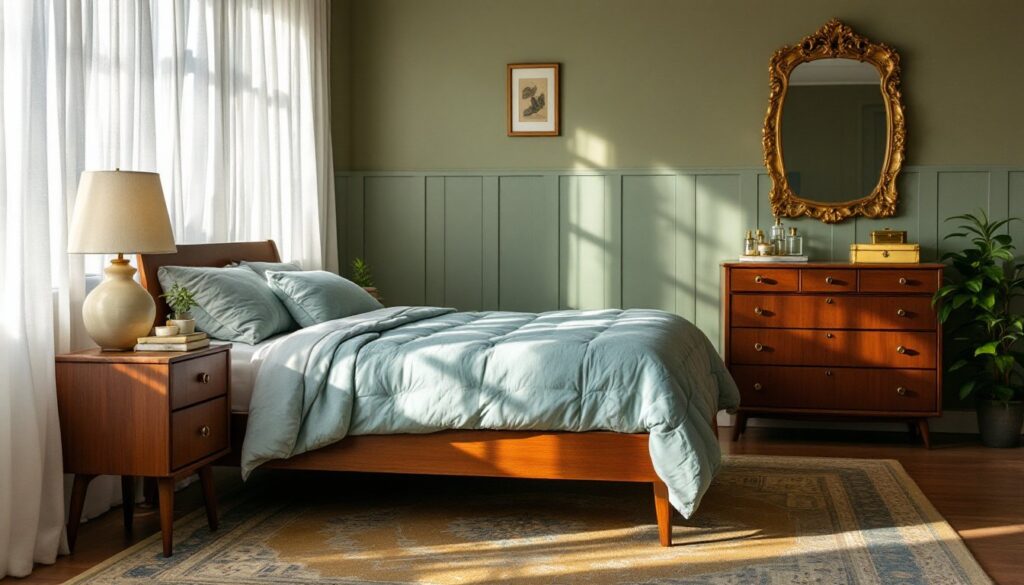
Mid-Century Modern (1945–1969): Clean lines, tapered legs, teak or walnut wood, minimal ornamentation. This era suits contemporary homes and blends easily with modern elements. Enthusiasts of this style often explore mid-century design principles for bedroom layouts.
Cottage/Farmhouse (1920s–1950s): Painted wood, distressed finishes, simple forms, and functional designs. Adaptable to various room sizes and pairs well with modern amenities.
Mixing eras requires restraint. A successful blend might combine a Victorian bed frame with mid-century nightstands, unified by a consistent color palette or finish treatment. Avoid cramming multiple bold periods together, one dominant era with subtle accents from another works best.
Essential Vintage Furniture Pieces That Make a Statement
Start with anchor pieces that define the room’s character:
Bed Frame: Look for solid wood construction, preferably hardwood. Metal frames from the 1920s–1940s (wrought iron or brass) add authentic period detail. Check for structural integrity, wobbly joints or cracked slats need repair before use. Standard vintage frames accommodate modern mattresses, but verify dimensions: some older frames require custom sizing.
Dresser or Chest of Drawers: Inspect drawer glides, joint stability, and veneer condition. Drawer boxes with dovetail joints indicate quality construction. Plan to replace drawer pulls if originals are missing, matching the period, glass knobs for Victorian, Bakelite for Art Deco, brass for mid-century.
Nightstands: Period-appropriate bedside tables should match bed height (typically 24–28 inches to align with mattress top). Mismatched pairs work if finishes coordinate, two different mid-century pieces in similar wood tones create visual interest.
Vanity or Dressing Table: Common in pre-1960s bedrooms, these pieces add functionality and charm. Verify mirror stability and check for silvering deterioration (black spots on mirror backing). Re-silvering costs $5–15 per square foot if restoration’s needed.
When sourcing furniture, estate sales and auctions offer better values than antique shops, though selection’s unpredictable. Expect to refinish or repair most pieces, factor in 2–4 hours of prep and finishing work per furniture item.
Color Palettes and Wall Treatments for Authentic Vintage Charm
Period-accurate color schemes establish the room’s era and mood:
Victorian: Deep jewel tones (burgundy, forest green, navy), paired with cream or ivory trim. Wallpaper featuring damask or floral patterns was standard: modern peel-and-stick versions offer easier installation than traditional paste methods.
Art Deco: Bold contrasts, black and gold, navy and silver, emerald and cream. High-gloss paint finishes (use semi-gloss or high-gloss latex) mimic the era’s lacquered surfaces.
Mid-Century Modern: Muted earth tones (olive, mustard, burnt orange) with crisp white or off-white walls. Accent walls in period colors add punch without overwhelming smaller rooms.
Cottage/Farmhouse: Soft pastels (powder blue, sage green, blush pink) or warm whites. Milk paint or chalk paint creates authentic matte finishes on walls and furniture.
For wall treatments, consider:
- Paint: One gallon covers approximately 350–400 square feet (one coat). Most vintage colors require two coats for even coverage. Those exploring paint options for bedrooms should test samples in natural and artificial light before committing.
- Wallpaper: Prepasted varieties simplify DIY installation. Calculate rolls needed by measuring wall square footage and accounting for pattern repeats (typically 12–24 inches).
- Wood Paneling: Beadboard wainscoting (typically installed 32–36 inches high) adds cottage or farmhouse character. Use 1×4 or 1×6 tongue-and-groove boards for authentic appearance.
Prep work matters, clean walls, fill holes with spackle, sand smooth, and prime before painting. Skipping primer leads to uneven color and poor adhesion, especially over dark or glossy existing paint.
Vintage Textiles and Bedding That Transform Your Space
Layering period-appropriate fabrics adds warmth and authenticity:
Quilts and Coverlets: Vintage quilts (1920s–1960s) showcase hand-stitching and cotton batting. Inspect for weak seams, stains, or fabric deterioration before purchasing. Gentle hand-washing in cool water with mild detergent preserves delicate pieces: avoid machine washing unless fabric’s in excellent condition.
Chenille Bedspreads: Popular from the 1930s–1950s, these cotton spreads feature tufted patterns. Authentic chenille shows slight fading and wear, perfectly acceptable. Modern reproductions lack the weight and texture of originals.
Linens and Pillowcases: White or cream cotton with embroidered details, lace edging, or monograms. Vintage linens often feature higher thread counts (200–400) than their modern counterparts, even though being thinner fabric.
Curtains and Drapes: Heavy fabrics (velvet, brocade) suit Victorian styles: lightweight cotton or linen fits cottage aesthetics. Period homes used floor-length panels, often with valances or cornices. Standard curtain panels measure 84 or 96 inches: verify ceiling height before purchasing.
For DIYers comfortable with sewing, repurposing vintage fabric into pillow covers or duvet covers extends limited yardage. Resources like Young House Love offer tutorials on simple sewing projects for home decor.
Safety Note: Vintage textiles may contain dust mites or allergens. Air outside for several hours and consider professional cleaning for valuable or delicate pieces before use.
Finishing Touches: Accessories and Lighting for Vintage Appeal
Details complete the vintage aesthetic:
Lighting Fixtures:
- Table Lamps: Ceramic bases (1940s–1950s), brass with glass shades (Victorian), or teak with linen shades (mid-century). Rewire old lamps for safety, replace frayed cords, update sockets, and verify polarized plugs. Budget $15–30 in electrical supplies per lamp.
- Ceiling Fixtures: Schoolhouse pendants, crystal chandeliers, or sputnik fixtures depending on era. Installation requires basic electrical knowledge: if uncomfortable working with wiring, hire a licensed electrician. Cost runs $75–150 for straightforward fixture replacement.
Wall Decor:
- Vintage mirrors with ornate frames (Victorian) or sunburst designs (mid-century)
- Framed botanical prints, family photographs in period frames, or reproduction advertisements
- Plate racks displaying vintage china or decorative plates
Accessories:
- Glass perfume bottles, jewelry boxes, or vanity trays on dressers
- Vintage clocks (wind-up or electric)
- Ceramic or brass candlesticks
- Area rugs, Persian or Oriental for Victorian, geometric patterns for Art Deco, shag or flat-weave for mid-century
Books and Magazines: Vintage hardcovers (look for cloth bindings and gilt titles) stacked on nightstands add instant character. Budget home decor enthusiasts browsing Addicted 2 Decorating find creative repurposing ideas for vintage accessories.
Avoid over-accessorizing, select a few meaningful pieces rather than cluttering surfaces. Each item should serve a purpose or hold visual interest. Rotate accessories seasonally to keep the space fresh without major overhauls.
Conclusion
Creating an authentic vintage bedroom requires research, patience, and attention to period details. Focus on quality anchor pieces, coordinate colors and finishes within a chosen era, and layer textiles and accessories thoughtfully. The result is a space with genuine character that modern reproductions can’t match, a bedroom that feels collected over time rather than purchased in one shopping trip.