Table of Contents
ToggleBlank garden walls are missed opportunities. Whether it’s a privacy fence, a retaining wall, or the side of a shed, these vertical surfaces can become focal points that extend your living space outdoors. Garden wall decor isn’t just about aesthetics, it defines zones, adds depth to small yards, and creates visual interest year-round when flowerbeds go dormant. With the right approach, even a cinderblock foundation wall can turn into a backdrop worth photographing. This guide walks through practical ideas, materials that hold up outdoors, and weekend-friendly DIY projects that make immediate impact.
Key Takeaways
- Garden wall decor transforms blank outdoor surfaces into focal points that expand visual space, add functionality, and establish style continuity between indoor and outdoor living areas.
- Choose materials based on exposure: avoid warping materials on south- and west-facing walls, use heavy-duty hardware for wind-prone areas, and ensure installations match your wall type (vinyl, brick, stucco, or wood).
- Popular garden wall decor styles range from rustic farmhouse accents like reclaimed shutters and galvanized metal to modern contemporary options including powder-coated steel panels and outdoor mirrors.
- DIY projects like vertical pallet planters, mosaic tile art, and rope-and-wood ladder displays can be completed in a weekend with proper prep work, mounting hardware, and exterior-grade materials.
- Group decor items in odd numbers, choose pieces roughly 20% larger than indoor equivalents to hold visual weight, and select low-maintenance materials like powder-coated metal if seasonal upkeep isn’t feasible.
- Proper surface preparation—including pressure washing, priming, and sealing—is critical for paint adhesion and durability on outdoor masonry and wood surfaces.
Why Garden Wall Decor Matters for Your Outdoor Living Space
Outdoor walls serve structural purposes, retaining soil, blocking wind, marking property lines, but left bare, they create dead zones that pull the eye away from carefully planted beds or seating areas. Decorating these surfaces does several things at once.
First, it draws the eye upward, making small gardens feel larger. A vertical trellis with climbing jasmine or a series of mounted planters breaks up the horizontal plane and adds layers. Second, it provides functionality beyond looks: mirrors reflect light into shaded corners, hooks hold tools or hose reels, and shelving stages container plants at varying heights.
Third, garden wall decor establishes style continuity between indoor and outdoor rooms. A patio wall extension can tie together materials like stained wood or metal finishes used inside, creating a cohesive flow when doors are open. This matters especially in homes where the patio functions as a true outdoor living room.
Finally, it solves the “boring fence” problem. Cedar or vinyl fencing does its job but rarely inspires. Adding decor, whether reclaimed shutters, metal art, or living wall panels, turns a utilitarian barrier into a design element that complements plantings rather than competing with them.
Best Types of Garden Wall Decor for Different Styles
Rustic and Farmhouse Garden Wall Accents
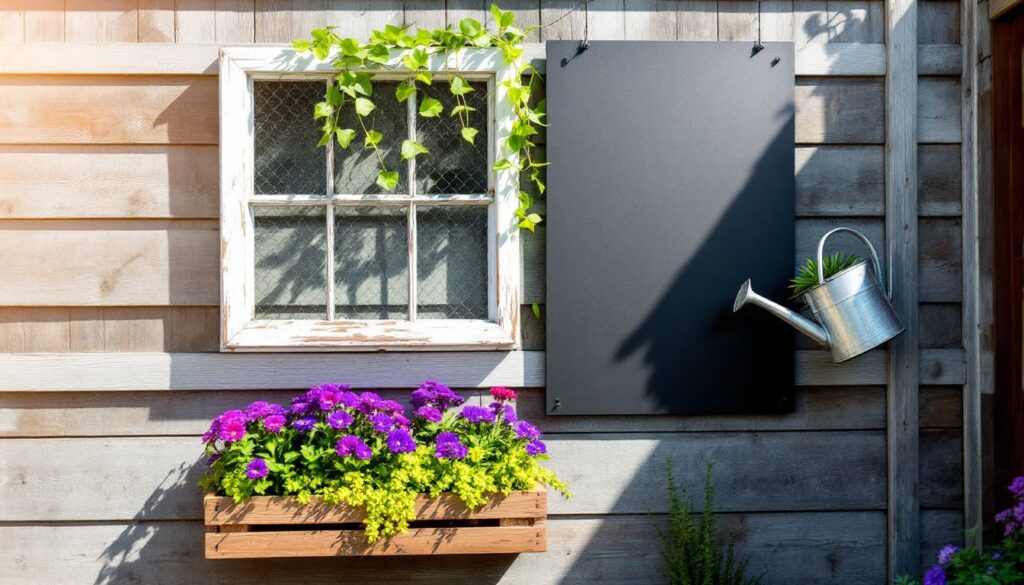
Reclaimed wood shutters and window frames are workhorses in farmhouse gardens. Look for pieces with peeling paint or weathered patina, new distressing rarely looks authentic. Mount shutters in pairs flanking a wall-mounted planter box, or hang a single window frame with chicken wire backing to support trailing ivy.
Galvanized metal works well for this aesthetic. Old watering cans, enamelware basins, or feed troughs can be hung directly on fence posts using galvanized screws (not standard steel, which rusts through). Drill drainage holes in the bottom if using them as planters. Galvanized steel lasts decades outdoors without a finish, though it will develop a matte gray patina over time.
Wagon wheels and vintage farm tools are divisive, they can look great or like theme-park props. The difference is restraint. One well-placed item anchors a vignette: five scattered across a fence looks cluttered. If using tools (rakes, hand saws), mount them securely with heavy-duty hooks rated for outdoor use, not picture hangers.
Wooden signs with hand-lettered sayings are popular but weather poorly unless properly sealed. Use exterior-grade plywood (not MDF or particle board), prime all sides with oil-based primer, then finish with exterior latex paint. Seal with spar urethane rated for UV protection. Re-seal annually in climates with freeze-thaw cycles.
Modern and Contemporary Outdoor Wall Art
Powder-coated steel panels offer clean lines and durability. Laser-cut geometric patterns or abstract designs work well on stucco or brick walls. These typically mount with stainless steel standoffs that create a 1–2 inch gap, adding shadow depth. Ensure panels are powder-coated, not just painted, powder coating resists chipping and fading far better.
Horizontal slat walls (often called privacy screens) double as decor. Build them from 1×4 or 1×6 cedar boards spaced 1–3 inches apart, mounted to a 2×4 frame. This creates rhythm and lets light filter through while obscuring sightlines. Seal with transparent deck stain to preserve the wood tone, or go bold with solid exterior stain in charcoal or sage.
Metal wall planters in matte black or brushed stainless steel keep the focus on plant textures. Box planters with built-in drainage and hidden mounting brackets look integrated rather than hung as an afterthought. For a modern accent wall approach, consider a grid of identical planters with a single plant variety, like trailing pothos or succulent hens-and-chicks, for graphic impact.
Outdoor mirrors expand sight lines in narrow side yards. Use only mirrors designed for exterior use, with sealed edges to prevent moisture intrusion. Acrylic mirrors are lighter and safer than glass but scratch more easily. Position mirrors to reflect greenery, not harsh sun, which can create glare or even start fires in dry climates.
DIY Garden Wall Decor Projects You Can Make This Weekend
Vertical Pallet Planter: Source a heat-treated pallet (stamped HT, never MB, which indicates toxic methyl bromide treatment). Sand rough edges, then attach landscape fabric to the back using a staple gun to contain soil. Lay the pallet flat, fill gaps between slats with potting mix, plant shallow-rooted annuals or succulents, and let it establish for two weeks before mounting vertically. Use 3-inch lag screws into wall studs or masonry anchors rated for the pallet’s loaded weight (typically 40–60 lbs). Wear gloves and safety glasses when cutting or sanding, splinters and dust are unavoidable.
Mosaic Tile Art: Broken ceramic tiles, glass pieces, or pebbles can be adhered to a cement backer board using outdoor tile adhesive (thinset mortar). Draw your design first, work in small sections, and grout with sanded grout rated for exterior use. Seal the grout after it cures (typically 72 hours) with a penetrating sealer to prevent staining and moisture infiltration. This project works well on protected walls (under eaves or pergolas) but may crack in areas with heavy freeze-thaw cycles unless you use flexible grout.
Stenciled Concrete or Stucco: Use an exterior-grade stencil and acrylic exterior paint or masonry paint. Clean the wall thoroughly with a pressure washer or stiff brush and let it dry completely, moisture under paint causes peeling. Tape the stencil securely and apply paint with a foam roller or stencil brush in thin coats: heavy application causes bleeding under the stencil. Seal with a clear masonry sealer if the wall isn’t under cover. According to tips from Better Homes & Gardens, surface prep is critical for paint adhesion on outdoor masonry.
Living Wall Panels: Pre-made felt pocket systems or modular plastic grid panels let you create a true planted wall. These require consistent moisture, either drip irrigation or hand-watering several times weekly in summer. Mount panels to pressure-treated 2×4 furring strips attached to the wall, ensuring at least a 1-inch air gap for drainage. Use outdoor-rated screws (stainless or coated) and check local codes: living walls add weight and moisture, which can affect siding or stucco if not properly detailed. For plant selection guidance, The Spruce offers region-specific recommendations for vertical gardens.
Rope and Wood Ladder Display: Cut two 2×2 cedar or redwood rails to 6 feet, then space 1×3 rungs every 12 inches. Drill pilot holes to prevent splitting, then assemble with exterior wood screws. Wrap natural manila rope around joints for a nautical or bohemian look (optional). Treat with exterior wood stain or spar urethane. Lean it against the wall or mount with L-brackets at the top. Hang small potted plants, lanterns, or S-hooks for tools.
How to Choose the Right Garden Wall Decor for Your Space
Start by assessing exposure. South- and west-facing walls get intense UV and heat. Avoid materials that warp or fade: untreated pine, thin plastics, or cheap resin. Metal can become too hot to touch in full sun, if mounting metal art, ensure it’s not near seating or pathways where kids or pets might brush against it.
Wind load matters on tall fences or exposed walls. Lightweight items (metal wall hangings, lightweight frames) can rattle or blow off in storms. Use heavy-duty mounting hardware: toggle bolts for hollow walls, tapcon screws for masonry, or lag screws into studs for wood fencing. If you live in a high-wind area (coastal or plains regions), skip sail-like decor such as large fabric panels or unsecured shutters.
Scale is where most DIYers stumble. A single 12×12-inch piece of art looks lost on a 20-foot fence. Group items in odd numbers (three or five), or choose larger statement pieces. As a rule, outdoor decor should be roughly 20% larger than you’d use indoors to hold its own against open sky and plantings. Insights from Gardenista’s wall decor gallery show that oversized pieces often photograph better and create stronger focal points.
Material compatibility with your wall type is non-negotiable. Mounting to vinyl siding requires special hooks or backing plates to distribute weight: screws alone can crack panels. Brick and stone need masonry bits and anchors, never drive screws directly into mortar joints. Stucco is fragile: use plastic anchors rated for stucco, not drywall anchors. For wood fences, locate the horizontal rails (typically spaced 24 inches on center) and fasten into those, not just the vertical pickets.
Finally, consider maintenance. Living walls need irrigation and pruning. Metal rusts (even galvanized or stainless, eventually). Wood requires annual sealing. If you’re not up for seasonal upkeep, stick with powder-coated metal, composite materials, or high-fired ceramic that can sit untouched for years.
Conclusion
Transforming a blank garden wall doesn’t require a contractor or a big budget, just a clear plan and weather-appropriate materials. Whether it’s a pallet planter installed in an afternoon or a carefully curated gallery wall of vintage tools, these projects add personality and function to outdoor spaces that often go ignored. Focus on proper mounting, choose materials that match your climate and sun exposure, and don’t skip the prep work. When done right, garden wall decor holds up season after season and turns forgotten vertical space into one of the most interesting parts of the yard.