Table of Contents
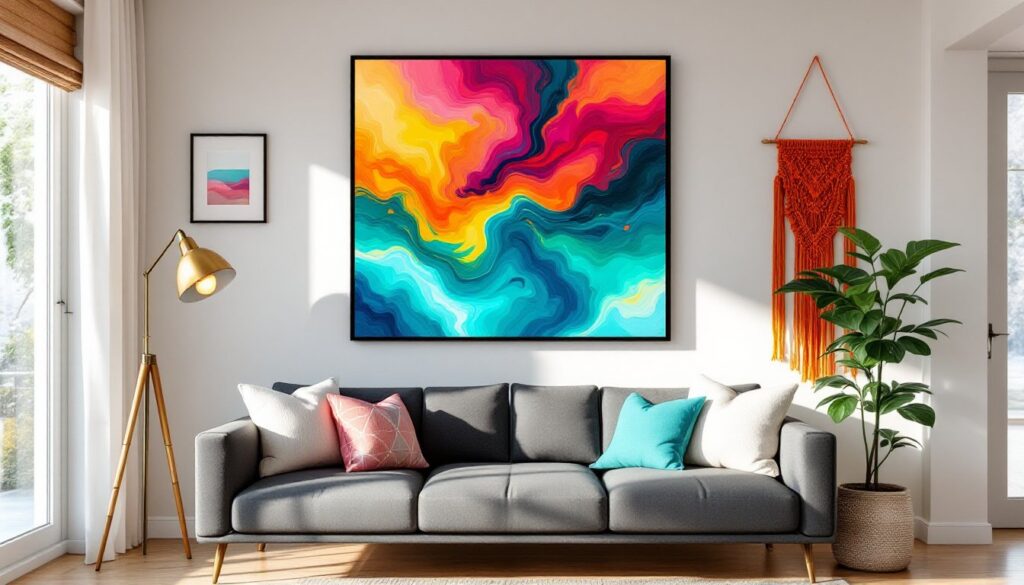
ToggleBare walls feel unfinished. They don’t just lack personality, they miss the opportunity to shape mood, define a room’s purpose, and show off a homeowner’s style. Colorful wall decor does more than fill empty space. It anchors furniture arrangements, balances architectural quirks, and injects energy into rooms that feel flat. Whether it’s a bold abstract canvas over the sofa or a curated gallery wall climbing a staircase, the right pieces turn drywall into a design asset. This guide breaks down types of colorful decor, color selection strategies, DIY projects worth the effort, and practical styling tips that work in real homes.
Key Takeaways
- Colorful wall decor transforms bare walls into design assets that define room purpose, anchor furniture, and reflect your personal style without permanent commitment.
- Choose your color palette by pulling 1-2 colors from existing fixed elements and adding a contrasting accent through wall decor, following the 60-30-10 rule for balanced proportions.
- Popular colorful wall decor options include canvas art, gallery walls, tapestries, textiles, and DIY projects like pour paintings and stenciled wood panels that suit any skill level.
- Install pieces at 57-60 inches from the floor for standard gallery height, leave 6-8 inches between art and furniture, and use odd numbers of pieces for dynamic asymmetry.
- Enhance colorful wall decor impact with proper lighting, strategic negative space, and color distribution across walls to guide the eye naturally throughout your space.
Why Colorful Wall Decor Makes a Powerful Design Statement
Color affects perception more than most homeowners realize. A yellow accent in a kitchen feels welcoming. Deep blues in a bedroom slow the heart rate. Oranges and reds energize creative spaces. Colorful wall decor leverages this psychology without committing to a full repaint or wallpaper installation.
Unlike neutral pieces, vibrant art creates focal points that guide the eye and anchor furniture. A large-scale piece above a couch defines the seating area. A series of smaller colorful prints along a hallway transforms a pass-through into an intentional gallery.
Colorful decor also offers flexibility. Swap out pieces seasonally or when tastes shift without hiring a painter. This adaptability makes it ideal for renters or homeowners testing design directions before permanent changes. It’s a reversible commitment that still delivers visual impact.
Finally, colorful walls reflect light differently than bare surfaces. Glossy canvases bounce natural light around dim corners. Textured textiles add depth and shadow play. These interactions create dimension that flat paint alone can’t match.
Types of Colorful Wall Decor to Brighten Any Room
Canvas Art and Gallery Walls
Canvas prints and original paintings deliver concentrated color. Stretched canvas (the fabric-wrapped kind) comes ready to hang, no frame needed, and works well in modern or eclectic spaces. Framed canvas prints suit traditional rooms or when matching existing trim.
Gallery walls multiply impact. Mix canvas sizes, orientations, and color intensities to build visual interest. Aim for at least three pieces to avoid looking sparse. Use a consistent mat color or frame finish to unify diverse art styles.
Print-on-demand services make custom canvas affordable, but check resolution requirements before uploading images. Most vendors need at least 150 DPI at full print size to avoid pixelation. If printing personal photos, test a small size first.
When installing accent wall ideas alongside canvas art, coordinate the wall color to either complement or contrast the dominant hues in the artwork.
Tapestries, Textiles, and Wall Hangings
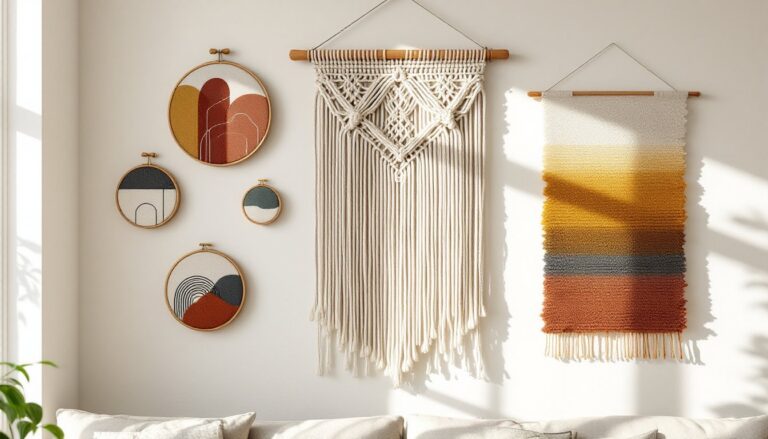
Fabric-based decor adds warmth and absorbs sound, useful in rooms with hard floors or high ceilings. Woven tapestries bring texture and pattern. They’re lighter than framed art, making them renter-friendly with removable adhesive hooks rated for fabric weight.
Macramé wall hangings suit bohemian or coastal aesthetics. Look for pieces dyed with vibrant hues rather than default natural cotton for maximum color impact. Hang them using a wooden dowel or copper pipe threaded through the top loops.
Quilts and textile art work in farmhouse or eclectic interiors. Mount vintage quilts with a sleeve backing, a fabric tube sewn to the top edge, slipped over a curtain rod. This distributes weight evenly and prevents sagging.
Many DIY artwork projects incorporate textiles for homeowners seeking handmade, one-of-a-kind pieces. Fabric is forgiving for beginners compared to rigid substrates.
How to Choose the Right Color Palette for Your Space
Start with existing fixed elements: flooring, cabinetry, and furniture upholstery. Pull one or two colors from these pieces to create continuity, then add a contrasting accent color through wall decor. This three-color approach prevents visual chaos.
Consider room function. High-energy spaces like kitchens and playrooms handle bold primaries and saturated hues. Bedrooms and reading nooks benefit from cooler tones, blues, greens, soft purples, that promote relaxation. Home offices balance both: grounding neutrals with energizing pops.
Test color impact before committing. Most paint retailers offer peel-and-stick sample sheets. Apply them near your intended decor location and observe how natural and artificial light shifts the appearance throughout the day. Morning east light skews cool: afternoon west light goes warm.
Interior design experts at House Beautiful often recommend the 60-30-10 rule: 60% dominant color (walls, large furniture), 30% secondary color (upholstery, rugs), and 10% accent color (wall decor, pillows). This proportion creates balance without monotony.
Watch out for color temperature clashes. Warm yellows paired with cool grays often look muddy. Stick within temperature families, warm with warm, cool with cool, or use true neutrals (black, white, gray with no undertones) as bridges.
DIY Colorful Wall Decor Projects You Can Try Today
Abstract Pour Painting on Canvas
Pour painting requires minimal skill but delivers gallery-worthy results. You’ll need pre-stretched canvas (12×16 inches or larger), acrylic craft paint in 3-5 colors, pouring medium (Floetrol works), and disposable cups.
- Mix paint with pouring medium in a 1:1 ratio until it flows like warm honey.
- Layer colors in one cup without stirring.
- Flip the cup onto the canvas center and lift.
- Tilt the canvas to spread paint to edges.
- Let dry flat for 24-48 hours.
Wear gloves, acrylic stains hands and clothing. Work on a drop cloth and elevate the canvas on cups so excess paint drips off edges.
Stenciled Wood Panel Art
This project suits homeowners comfortable with a miter saw or circular saw. Cut 1×6 pine boards to equal lengths (four 24-inch pieces work well). Sand with 120-grit sandpaper, then apply primer if painting light colors over pine’s yellow undertones.
Use adhesive stencils from craft stores. Secure with painter’s tape. Apply 2-3 thin coats of latex or acrylic paint with a foam roller to prevent bleed-under. Peel stencils while paint is still tacky.
Mount finished boards with French cleats for a flush, professional look. This hanging method distributes weight across the stud and allows easy removal.
Fabric-Wrapped Foam Boards
Ideal for renters or commitment-phobes. Purchase 1-inch foam insulation boards (available at home centers in 2×4-foot sheets) and upholstery-weight fabric with bold patterns.
- Cut foam to desired sizes, three 12×18-inch panels create a nice trio.
- Cut fabric 3 inches larger on all sides.
- Wrap fabric around foam, pulling taut, and secure the back with a staple gun or hot glue.
- Hang with Command Picture Hanging Strips rated for the panel weight.
This technique appears in numerous budget decorating tutorials because materials cost under $30 for a multi-panel installation.
Styling Tips for Arranging Colorful Wall Decor
Height and Spacing Matters
Hang art so the center sits at 57-60 inches from the floor, standard gallery height that aligns with average eye level. For pieces above furniture, leave 6-8 inches between the furniture top and the frame bottom. Too much space disconnects the art from the arrangement.
When creating gallery walls, lay out the arrangement on the floor first. Use painter’s tape on the wall to mark each piece’s position before hammering nails. This prevents Swiss-cheese drywall from trial-and-error.
Balance Color Distribution
Avoid clustering all warm or cool tones in one area. Distribute colors across the wall so the eye travels naturally. If hanging five pieces, arrange them so no two adjacent items share a dominant color.
In decor design construction, professionals often use an odd number of pieces, three, five, seven, because asymmetry feels more dynamic than even groupings.
Layer with Lighting
Colorful art appears flat without proper lighting. Install picture lights (battery-operated LED strips work for renters) or aim adjustable track lighting at key pieces. Lighting adds depth and intensifies colors that look dull in dim corners.
Use Negative Space Strategically
Not every wall needs filling. Colorful statement pieces gain power from breathing room. Leave at least 12 inches of blank wall around large, vibrant art. This prevents visual competition and lets the piece dominate.
Safety Note: When hanging pieces over 25 pounds, locate studs with a stud finder and use appropriate hardware, wood screws into studs or toggle bolts for drywall-only areas. Adhesive strips fail over time with heavier loads, risking damage and injury.