
Table of Contents
ToggleA fireplace is more than a heat source, it’s the anchor of a living room, the spot where holiday stockings hang, and often the first thing guests notice when they walk in. Getting the decor right means balancing texture, scale, and function without tipping into cluttered territory. Farmhouse style plays to those strengths naturally: reclaimed wood, wrought iron, weathered finishes, and a color palette that leans on whites, grays, and warm earth tones. Whether someone’s working with a brick surround that hasn’t been touched since 1987 or a builder-grade gas insert, the right decorating approach can turn a forgettable feature into a room’s defining element.
Key Takeaways
- Farmhouse fireplace decor balances reclaimed wood, wrought iron, and neutral tones (whites, grays, warm earth tones) to transform any fireplace into a room’s focal point without cluttering the space.
- Use the rule of thirds when styling your mantel: anchor with a large centerpiece, vary heights with flanking elements, and incorporate greenery or texture to soften hard architectural lines.
- Essential surround materials like whitewashed brick, shiplap, stone veneer, or subway tile pair seamlessly with oversized wood mantels (at least 6×6 inches) for authentic farmhouse character.
- Seasonal styling keeps farmhouse fireplace decorating fresh—rotate lightweight elements in spring, strip down in summer, layer warm metallics in fall, and go vertical with evergreens in winter.
- DIY projects like building a reclaimed wood mantel, whitewashing brick, or creating a faux eucalyptus garland are budget-friendly (often $15–$40) and achievable in 2–3 hours with basic carpentry skills.
- Always maintain 12 inches of clearance between combustible materials and active fireboxes to ensure safety and compliance with local building codes.
Essential Elements of Farmhouse Fireplace Style
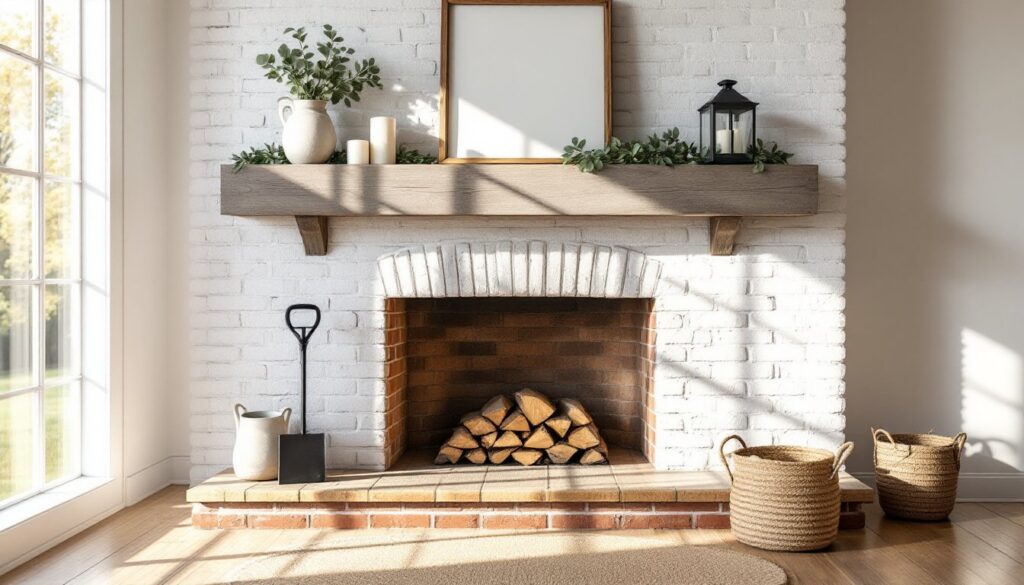
Farmhouse fireplace design ideas rely on a handful of repeating elements that create visual warmth without formal fussiness. Start with natural materials, reclaimed wood mantels, stone or brick surrounds, and metal accents in matte black or oil-rubbed bronze. These provide the foundational texture that makes the style recognizable.
Whitewashed or painted brick remains a go-to move for modernizing outdated red brick. Use chalk paint or a diluted latex wash (mix one part paint to three parts water) for a limewash effect. Test on a hidden spot first: once paint soaks into porous brick, removal requires sandblasting or chemical strippers.
Oversized wood mantels anchor the look. If installing a new mantel, aim for at least 6×6-inch rough-sawn beams for visual heft. Secure to studs using lag bolts (minimum ½-inch diameter) if it’s a non-structural beam, or consult local code if the mantel will support stockings, garland, or heavy decor. Many jurisdictions require 12 inches of clearance between combustible materials and the firebox opening, confirm measurements before installation.
Modern farmhouse fireplace ideas often incorporate shiplap or board-and-batten treatments on the chimney breast. ½-inch MDF or pine boards work well here. Prime all sides before installation to prevent warping, especially near active fireplaces where humidity fluctuates. Use a nail gun with 18-gauge brad nails and fill holes with lightweight spackle. These wall treatments pair well with simple mantels and design house decor choices that emphasize clean lines.
Rustic Mantel Decorating Ideas for Every Season
Choosing the Perfect Farmhouse Mantel Decor
A well-dressed mantel uses the rule of thirds to balance height, weight, and visual interest. Start with a large anchor piece, oversized framed art, a vintage window frame, or a salvaged mirror, positioned off-center or leaning casually against the wall. Flanking elements should vary in height: stack books under a small pitcher, prop a wooden cutting board next to a ceramic vase, or group candles on a galvanized tray.
Greenery softens hard edges. Faux eucalyptus garland drapes well and doesn’t drop leaves. Real olive branches last weeks in a dry arrangement. Avoid putting live greenery directly over an active firebox, radiant heat dries it out fast, creating a fire hazard.
Texture matters more than color. Pair a rustic wooden sign (real barn wood, not printed canvas) with smooth ironstone, woven baskets, and linen fabric. Stick to two or three neutral tones per season to keep the look cohesive. Popular pairings include cream and charcoal, warm gray and rust, or white and natural wood.
Seasonal Styling Tips
Spring: Swap heavy wood pieces for lighter elements, white pitchers filled with pussy willow branches, nests with faux eggs, or linen banners in soft pastels. Keep the base neutral and rotate smaller items.
Summer: Strip down to essentials. A single galvanized bucket with fresh hydrangeas, a driftwood piece, and two white pillar candles on varying heights give a clean, uncluttered look. This is the season to let architectural details like a painted brick surround shine.
Fall: Layer warm metallics, brass candlesticks, copper planters, or antique lanterns. Add texture with wheat bundles, dried corn husks, and small pumpkins (real or high-quality resin). A burlap runner anchors the arrangement without overwhelming it. Many homeowners turn to resources like Country Living for seasonal inspiration that balances trend and tradition.
Winter: Go vertical with evergreen garland, magnolia branches, or a birch log bundle tied with jute. White candles in varying heights, mercury glass votives, and a single oversized wreath create a backdrop for stockings. Keep combustibles at least 12 inches from the firebox if the fireplace is in use.
Fireplace Surround Materials and Finishes
The surround sets the tone. Painted brick remains the fastest cosmetic update. For a true limewash look, use Romabio Classico Limewash or mix your own with hydrated lime (wear gloves and eye protection, lime is caustic). Apply with a masonry brush in uneven strokes, leaving some brick showing through. Two coats usually suffice.
Stone veneer adds texture without a full masonry rebuild. Manufactured stone panels run $6–$12 per square foot (material only) and install over cement board with thinset mortar. This is a one- to two-day project for a competent DIYer but requires mixing mortar to the right consistency and cutting stone with a wet tile saw. Grout lines should stay ⅜ to ½ inch for a natural stacked-stone look.
Tile surrounds suit modern farmhouse aesthetics when kept simple. Subway tile in matte white or soft gray, installed in a running bond or herringbone pattern, complements wood mantels and metal accents. Use heat-resistant thinset rated for fireplace applications and unsanded grout for tight grout lines. Tile must stop before reaching combustible clearances, check IRC guidelines or local amendments.
Concrete surrounds are gaining traction. Ardex Feather Finish or similar skim coats can be troweled over existing brick or drywall (over cement board near the firebox) for an industrial-farmhouse hybrid. The material self-levels but requires practice to avoid trowel marks. Seal with a penetrating concrete sealer to prevent staining.
If the fireplace is purely decorative (non-functional), options open up. Homeowners have installed reclaimed barn siding, tongue-and-groove pine, or even peel-and-stick wallpaper directly on the surround. For active fireplaces, these materials must stay outside combustible clearance zones. When in doubt, hire a CSIA-certified chimney sweep to inspect clearances and draft before making structural or finish changes.
Layering Textures and Accessories Around Your Fireplace
Accessories anchor the farmhouse look, but restraint separates a styled hearth from a cluttered one. Start at the hearth level. A woven jute rug or vintage kilim runner softens tile or stone and adds warmth underfoot. Keep rugs at least 18 inches from the firebox opening if the fireplace is active.
Flank the fireplace with matching baskets for firewood storage, wire or woven seagrass both work. Stack wood bark-side out for a cleaner look. If burning wood regularly, keep only one day’s supply indoors to limit pest issues.
Iron fireplace tools should be functional, not decorative. A poker, shovel, brush, and tongs in a standing rack keep embers manageable and add vertical interest. Look for sets in hand-forged or powder-coated steel rather than shiny brass.
Above the mantel, oversized art or mirrors reflect light and make the room feel larger. Frames in distressed wood, black metal, or no frame at all (stretched canvas or barn wood signs) suit the style. Leaning art rather than hanging it adds a casual, collected-over-time feel. Secure leaning pieces with museum putty or small L-brackets to prevent tipping.
On the mantel itself, vary heights and group items in odd numbers. A three-wick candle on a wooden riser, a small potted succulent, and a ceramic pitcher create visual rhythm. Avoid matching pairs, farmhouse style favors asymmetry. Publications like Southern Living frequently showcase layered mantel styling that balances farmhouse charm with livability.
Built-ins or shelving beside the fireplace offer bonus styling real estate. Keep the bottom third functional (storage baskets, closed cabinets) and the top two-thirds decorative (books, ironstone, small plants). Paint built-ins in Sherwin-Williams Pure White or Benjamin Moore Simply White to keep the look bright.
DIY Farmhouse Fireplace Decor Projects
Build a Reclaimed Wood Mantel
Materials:
- One 8-foot 6×8-inch reclaimed beam (or two 2×8 boards laminated for thickness)
- Lag bolts (½-inch × 4-inch), washers, and lag shields if mounting to brick
- Stud finder, level, drill with masonry bit (if needed)
- Wood stain or whitewash (optional)
Steps:
- Measure the fireplace width and add 6–12 inches overhang on each side.
- Locate studs or masonry anchors. Mark mantel height (typically 54–60 inches from the floor for standard fireplaces).
- Pre-drill holes in the beam. If mounting to drywall, drill into studs. For brick, use a masonry bit and install lag shields.
- Have a second person hold the beam level while driving lag bolts. Tighten until snug but avoid over-torquing, which can crack old wood.
- Distress edges with a chain or hammer for added character. Finish with dark walnut stain or a white pickling wash (equal parts white paint and water).
This project takes 2–3 hours and requires basic carpentry skills. If the mantel will support stockings or heavy garland, ensure at least three anchor points into solid framing.
Whitewash a Brick Fireplace
Materials:
- Chalk paint or latex paint in white or cream
- Water, spray bottle, stiff bristle brush
- Painter’s tape, drop cloths, gloves
Steps:
- Clean brick with TSP (trisodium phosphate) or a degreaser. Let dry completely.
- Mix paint and water in a 1:1 ratio for a heavy wash or 1:3 for a lighter effect.
- Dampen brick slightly with a spray bottle, this slows absorption and gives more working time.
- Apply wash with a brush, working in 2×2-foot sections. Dab with a rag to remove excess and expose brick texture.
- Let dry (usually 2–4 hours). Add a second coat if more coverage is desired.
Whitewashing is reversible only for the first few hours, once latex soaks in, removal requires chemical strippers. Test a small area first. Homeowners exploring broader decor design construction projects often pair whitewashed brick with shiplap or board-and-batten treatments for a cohesive update.
DIY Farmhouse Garland
Materials:
- Faux eucalyptus stems (8–10 stems for a 6-foot mantel)
- Floral wire, wire cutters, jute twine
- Optional: white taper candles, small battery-operated string lights
Steps:
- Lay stems on a table and overlap by 4–6 inches.
- Bind stems with floral wire, wrapping tightly at joints.
- Drape along the mantel, securing with small Command hooks or tucking ends behind decor.
- Weave in battery-operated fairy lights (avoid plug-in strands near active fireplaces).
- Finish with a jute bow at one end or tuck in dried lavender for scent.
This takes under 30 minutes and costs roughly $20–$30 depending on the quality of faux stems. Real greenery looks better but requires weekly replacement and increases fire risk near active fireboxes.
Farmhouse Fireplace Screen
For non-functional fireplaces, a custom screen adds character. Use an old window frame (sand and repaint in matte black or white), attach wire mesh or chicken wire to the back with a staple gun, and lean it in the firebox. Add a small battery-operated lantern or pillar candles behind the screen for ambiance. This project runs $15–$40 depending on salvage finds and takes about an hour. Many budget-conscious decorators find inspiration and guidance from platforms like Better Homes & Gardens when sourcing materials and planning DIY updates.