Table of Contents
ToggleDesigning a boy’s nursery is one of those projects where function meets pure joy. The walls are more than just painted drywall, they set the tone for late-night feedings, story time, and every milestone in between. Smart wall decor creates visual interest without overwhelming a small person’s developing senses, and it grows with them from infant to toddler years. Whether painting an accent wall, hanging shelves, or mounting framed art, the approach matters just as much as the aesthetic. This guide walks through practical decor strategies, theme options, DIY projects anyone can tackle, and color choices that work in real nurseries, not just catalog photos.
Key Takeaways
- Boy nursery wall decor serves developmental, practical, and organizational functions—high-contrast visuals at eye level support infant brain development while vertical storage keeps tight spaces functional.
- Durable finishes matter: choose low-VOC paint in washable eggshell or satin sheens, secure all wall-mounted elements into studs, and select sealed or wipeable materials to withstand diaper cream, spit-up, and eventual toddler markers.
- Popular themes like nautical, woodland, and vintage aviation remain timeless when executed with quality materials (real marine-grade rope, hand-cut wood silhouettes, framed prints) rather than mass-produced decals.
- DIY projects—wood name signs, fabric pennant banners, painted mountain murals, and gallery walls—are achievable with basic tools and cost $15–50, transforming the nursery on a modest budget.
- Skip outdated all-blue palettes and opt for soft blues with gray undertones, greens (sage, olive, eucalyptus), or warm neutrals paired with one accent wall behind the crib for visual interest without overstimulation.
- Paint 2×2-foot test patches and let them cure 72 hours before committing to the full room, and use a quality stain-blocking primer to ensure true color coverage with fewer coats.
Why Wall Decor Matters in Your Boy’s Nursery
Wall decor isn’t just about making a room Instagram-ready. It serves actual developmental and practical functions during those first years.
Visual stimulation plays a role in infant brain development. High-contrast patterns, simple shapes, and age-appropriate imagery give babies something to focus on during tummy time and crib moments. That doesn’t mean covering every surface, overstimulation is real, but intentional placement of wall elements at baby’s eye level (around 18-24 inches from the floor when they’re lying down) makes a difference.
Durability and cleanability matter more than most first-time parents realize. Nursery walls take abuse from diaper cream fingerprints, projectile spit-up, and eventually toddler markers. Washable paint finishes (eggshell or satin), sealed wood elements, and wipeable wall decals hold up better than flat paint or untreated fabrics.
The decor also anchors the room’s organization. Wall-mounted shelves, pegboards, and floating storage keep small spaces functional. When floor space is tight, most nurseries clock in around 100-120 square feet, vertical storage and decor become essential. Just make sure anything mounted goes into wall studs (typically 16 inches on center) or uses appropriate drywall anchors rated for the weight. A falling shelf is a safety hazard, not a design statement.
Popular Boy Nursery Wall Decor Themes and Styles
Classic and Timeless Themes
Nautical never goes out of style for a reason. Navy blues, crisp whites, rope accents, and subtle anchor or sailboat motifs work from newborn through elementary years. Wall-mounted rope shelving, framed vintage nautical charts, or a simple painted compass rose accent wall deliver the theme without veering into cartoonish territory. Use actual marine-grade rope (available at hardware stores) for authentic texture.
Woodland creatures remain a go-to, but execution matters. Instead of mass-produced decals, consider hand-cut wood silhouettes of bears, foxes, or owls mounted with 1-inch finish nails into studs. Stain them in varying shades (walnut, natural oak, espresso) for depth. Pair with a forest green or warm gray accent wall.
Vintage aviation appeals to parents who want nostalgia without looking dated. Framed black-and-white aviation prints, a propeller shelf (actual vintage props or quality replicas), and muted palette of sky blue, khaki, and aged leather tones create a sophisticated look. Mount lightweight model planes with museum putty or clear fishing line from ceiling joists, not drywall alone.
Modern and Minimalist Approaches
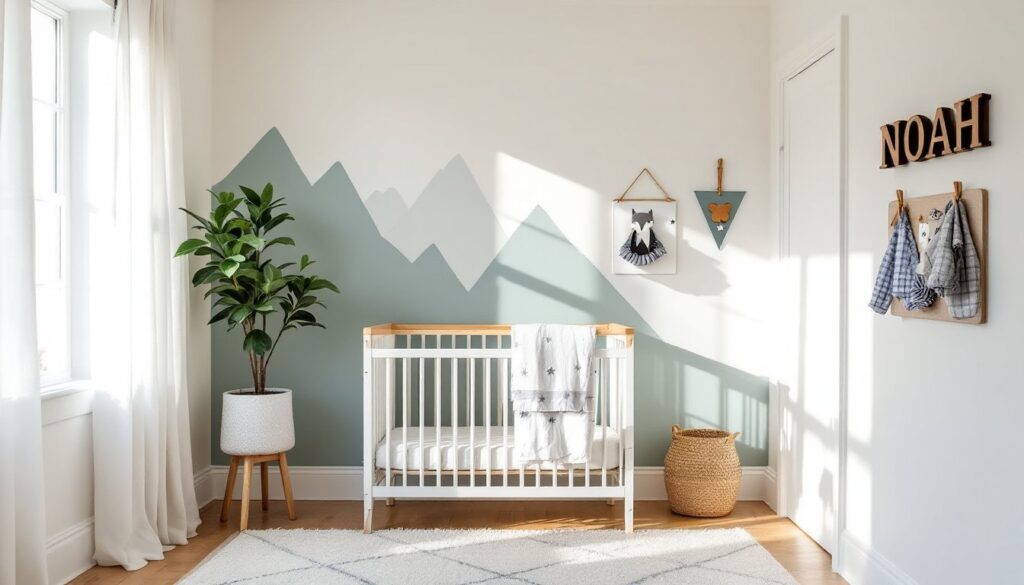
Geometric patterns offer visual interest without clutter. Paint a half-wall treatment using painter’s tape to create clean triangles, hexagons, or mountain silhouettes. Use FrogTape or 3M ScotchBlue for sharp lines, and remove tape at a 45-degree angle while paint is still slightly tacky to avoid peeling.
Monochrome with texture relies on varying materials rather than color. White shiplap accent wall, black metal grid for photo clips, natural wood floating shelves, and linen wall hangings create layers. This approach pairs well with those interested in boys’ bedroom design that can evolve as kids grow.
Scandinavian simplicity emphasizes function and calm. Soft grays, whites, and muted blues dominate. Wall decor stays minimal, a single large-scale art piece, one floating shelf with curated items, maybe a simple mountain mural in neutral tones. The focus is clean lines and natural light.
DIY Boy Nursery Wall Decor Ideas You Can Create Yourself
Wood Name Sign: Cut letters from ¾-inch pine using a jigsaw or scroll saw (or have them cut at a maker space). Sand edges smooth with 120-grit then 220-grit sandpaper. Stain or paint, then mount with construction adhesive and 1¼-inch finish nails into studs. Space letters 2-3 inches apart for readability. Total cost runs $15-30 depending on name length. Many DIYers find inspiration from home crafting tutorials when tackling letter-cutting techniques.
Fabric Pennant Banner: Use remnant cotton fabric (¼ yard each of 4-5 coordinating patterns). Cut triangles 8 inches wide by 10 inches tall. Fold the top edge over ½-inch bias tape and sew a straight stitch. String on twine or cotton cord. Hang with small nails or Command hooks. Takes 2-3 hours for a beginner sewer. No sewing machine? Use fabric glue and fold-over technique, just won’t be as durable.
Painted Mountain Mural: Tape off mountain silhouettes using varying heights. Paint from back to front in graduating shades (lightest mountains farthest back). Use sample-size paints (8 oz) in 3-4 coordinating colors. Start with a level line at your horizon, then work up and forward. Painters who’ve tried budget painting techniques often recommend this approach for accent walls. Remove tape slowly and touch up edges with a small brush.
Pegboard Organizer: Cut ¼-inch pegboard to size (most come in 2×4-foot or 4×8-foot sheets). Paint or stain as desired. Mount to wall using 1×2 furring strips behind to create space for pegs. Screw furring strips into studs with 2½-inch wood screws, then attach pegboard to strips with 1-inch screws. Add wood or metal pegs for hanging hats, small baskets, or framed photos. Clean, functional, and grows with the room.
Gallery Wall with Thrifted Frames: Hit estate sales for mismatched wood frames. Paint them all one color (matte black, white, or navy) for cohesion. Mat inexpensive prints or your own photos with acid-free matboard cut to size. Arrange on floor first, then transfer to wall using a level and measuring from a centerline. Use picture-hanging wire and D-rings on back, and hang from nails in studs or drywall anchors rated for 10-15 pounds each.
Choosing the Right Colors and Patterns for Boy Nursery Walls
Forget the outdated “boys get blue” rule. Modern nurseries use fuller palettes, and the wall color sets everything else in motion.
Soft blues and grays remain popular because they’re genuinely calming. Look for colors with gray undertones rather than primary blue. Think “stormy sky” not “kiddie pool.” Test samples on at least two walls, north-facing rooms read cooler, south-facing warmer. Paint a 2×2-foot test patch and live with it for a few days before committing to 5 gallons of the wrong shade.
Greens work beautifully, especially sage, olive, and eucalyptus tones. They’re gender-neutral without being beige, and they pair well with natural wood tones. Green also hides minor dirt and scuffs better than stark white.
Warm neutrals (greige, warm taupe, creamy whites) create a backdrop that won’t compete with colorful toys and books. Use these for three walls and add an accent wall in a deeper tone or pattern.
Accent walls should cover the wall behind the crib or changing area, the primary visual focus. Bold patterns work here: wide stripes, oversized polka dots (use a 10-inch plate as a template), or hand-painted designs. Keep the other three walls neutral for balance.
Pattern scale matters in small rooms. Large-scale patterns (stripes 12 inches or wider, oversized shapes) make walls feel more open. Tiny, busy patterns close in the space and create visual noise.
When selecting paint, use low-VOC or zero-VOC formulas. Babies spend 14-16 hours a day in that room initially, and off-gassing matters. Let paint cure for 72 hours minimum with windows open before bringing baby in. Primers matter too, use a stain-blocking primer on new drywall or over existing colors to ensure true color coverage with fewer coats. Resources from DIY painting experts often emphasize proper primer selection for nursery projects.
Washable finishes save headaches later. Eggshell or satin sheens clean up with a damp cloth without leaving marks, unlike flat paint. They cost $3-5 more per gallon but earn it back when you wipe down walls instead of repainting.
Conclusion
Boy nursery wall decor balances form, function, and durability. Smart material choices, secure mounting techniques, and age-appropriate designs create spaces that work through sleepless newborn nights and active toddler days. Most projects here require basic tools, weekend time frames, and modest budgets, well within reach for DIYers willing to measure twice and paint carefully. The result is a room with personality that doesn’t sacrifice practicality.