Table of Contents
ToggleSports wall decor does more than fill empty space, it turns a room into a statement. Whether someone’s a lifelong fan or raising the next varsity athlete, the right pieces ground a room in personality and energy. Unlike generic prints that blend into the background, sports-themed walls spark conversation and give a space purpose.
The challenge isn’t finding sports decor, it’s choosing pieces that look intentional, not like a college dorm threw up on the walls. This guide walks through practical approaches to selecting, arranging, and installing sports wall decor that fits a homeowner’s style, budget, and skill level.
Key Takeaways
- Sports wall decor establishes personal identity in a room faster than most design choices and brings bold colors that anchor a room’s color palette naturally.
- Choose a style that matches your space—vintage memorabilia works in offices and dens, while modern minimalist designs and canvas wraps suit contemporary interiors without overwhelming the room.
- Location matters: home offices and basements can handle bold displays, while living rooms need lighter touches; always protect valuable sports wall decor from direct sunlight to prevent fading.
- DIY sports wall decor projects like pallet wood pennant displays, stadium coordinate art, and jersey shadow boxes are affordable alternatives that often carry more personal meaning than store-bought pieces.
- For multiple pieces, use kraft paper templates to plan your layout before hanging, maintain 2–4 inches of space between frames, and use heavy-duty wall anchors or stud-mounted screws for pieces weighing over 10 lbs.
Why Sports Wall Decor Creates Impact in Your Home
Sports wall decor establishes identity in a room faster than most other design choices. A framed jersey, vintage pennant, or stadium blueprint immediately signals what matters to the people who live there. It’s not subtle, and that’s the point.
From a design perspective, sports pieces bring bold colors and graphic elements that anchor a room’s palette. Team colors, navy and orange, green and gold, red and white, provide a built-in color scheme that ties together furniture, rugs, and accessories without requiring a degree in interior design.
The scale of sports decor also works in a homeowner’s favor. Large canvas prints, oversized pennants, and framed jerseys fill vertical space efficiently, making them ideal for rooms with high ceilings or long blank walls. A single 36″ x 48″ canvas of a stadium photograph carries more visual weight than a gallery wall of small prints, and it’s easier to hang.
For families, sports decor grows with kids. A youth baseball player’s first uniform can be shadow-boxed and displayed, then joined by high school and college memorabilia over the years. The wall becomes a timeline, not just decoration.
Popular Sports Wall Decor Styles for Every Fan
Sports wall decor spans a wide range of aesthetics, from museum-quality framed memorabilia to DIY projects that cost less than a game ticket. The key is matching the style to the room’s function and the homeowner’s taste.
Vintage and Retro Sports Memorabilia
Vintage sports pieces, old pennants, ticket stubs, programs, and black-and-white team photos, bring a nostalgic, curated feel that works in home offices, dens, and finished basements. Authentic vintage items can be pricey, but reproductions and licensed retro prints offer the same aesthetic at a fraction of the cost.
Shadow boxes are the go-to mounting solution for three-dimensional items like baseballs, pucks, or small equipment. Standard shadow boxes range from 11″ x 14″ to 16″ x 20″, with depths of 1.5″ to 3″ to accommodate items with bulk. Mount them with heavy-duty picture hangers rated for 20-50 lbs, depending on the weight of the frame and contents. Drywall anchors are essential if studs aren’t conveniently located.
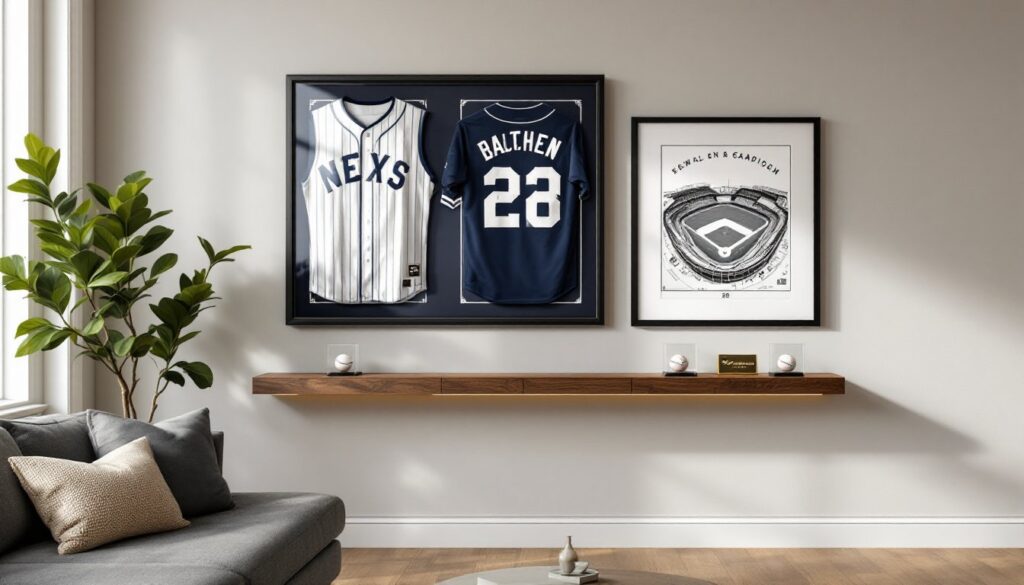
Framing jerseys requires a deeper approach, typically a 2″ to 3″ depth frame. Many DIY enthusiasts tackle jersey framing at home using foam boards and pins, though professional framing ensures UV-protective glass and acid-free matting that prevent fabric degradation over time.
Modern Minimalist Athletic Designs
For homeowners who want sports references without the visual noise, modern minimalist designs offer clean lines and restrained color palettes. Think line-art illustrations of athletes, monochrome stadium blueprints, or typography prints featuring iconic sports quotes.
Metal prints and acrylic panels give modern sports art a sleek, gallery-like finish. Aluminum prints are lightweight (under 5 lbs for a 24″ x 36″ piece), moisture-resistant, and don’t require glass, making them practical for high-humidity spaces like basements or bathrooms. They mount directly to the wall with float mounts or french cleats for a frameless look.
Canvas wraps in black-and-white or duotone color schemes fit contemporary interiors without overwhelming the room. A triptych of three 16″ x 20″ canvases hung horizontally creates a panoramic effect that works especially well above a sofa or credenza.
Choosing the Right Location for Your Sports Wall Decor
Placement dictates how well sports decor integrates into a home. The wrong location makes even high-quality pieces look like an afterthought.
Home offices and dens are natural fits for sports walls. These rooms already lean personal, and clients or guests expect to see the homeowner’s interests reflected. A wall behind a desk or opposite the seating area works well for large statement pieces.
Basements and rec rooms can handle bolder, busier displays, think multiple jerseys, a gallery wall of signed photos, or a full wall of accent paint in team colors with coordinating decor. Humidity control matters here: basements prone to dampness need dehumidifiers to protect paper goods and fabric from mold.
Kids’ bedrooms benefit from sports decor that’s easy to swap out as interests change. Removable wall decals, lightweight framed prints, and pegboard displays allow for flexibility without repeated drywall patching. Avoid heavy shadow boxes or glass frames above the bed, if mounting hardware fails, the consequences are serious.
Living rooms and main-floor spaces require a lighter touch. A single statement piece, like a framed vintage poster or a custom stadium map, fits better than a shrine. Keep it balanced with other decor elements so the room doesn’t read as single-note.
Avoid hanging valuable or irreplaceable items in direct sunlight. UV exposure fades ink, fabric, and photographs over time. If a sunny wall is the only option, use UV-filtering glass or acrylic in the frame, or rotate pieces seasonally to minimize damage.
DIY Sports Wall Decor Projects You Can Create This Weekend
Building custom sports wall decor is more accessible than most homeowners think, and DIY projects often carry more personal weight than store-bought alternatives.
Pallet Wood Pennant Display
Reclaimed pallet wood makes a rustic backing for vintage pennants. Cut a 1″ x 6″ pallet board to the desired length (48″ to 60″ works for most walls), sand it smooth, and apply a stain or leave it raw for a weathered look. Attach small cup hooks or upholstery tacks at even intervals, then hang pennants using their existing fabric loops or small binder clips. Mount the board to the wall with 2.5″ wood screws driven into studs.
Jersey Shadow Box
Framing a jersey without professional help requires a shadow box frame (24″ x 32″ or larger), foam core board, and T-pins. Lay the jersey flat on the foam core, smooth out wrinkles, and pin the shoulders, sides, and hem in place from the back. Insert the pinned board into the frame. If the jersey is valuable or signed, use acid-free materials to prevent deterioration. Many home decor bloggers recommend practicing on an old T-shirt before tackling a prized jersey.
Stadium Coordinate Art
Print the coordinates of a home stadium or favorite ballpark in large, bold type on 11″ x 17″ cardstock or poster board. Use free design software or online templates, then print at a local office supply store for under $5. Frame it in a simple black or white frame for a modern, minimalist look.
Equipment Shelf Display
Mount a floating shelf (12″ to 16″ deep) to display baseballs, footballs, helmets, or other gear. Use a stud finder to locate wall studs, then secure the shelf brackets with 3″ lag bolts for weight-bearing capacity. Add LED strip lighting underneath the shelf for a display-case effect.
Safety reminder: Always wear safety glasses when cutting wood or drilling into walls. Use a dust mask when sanding reclaimed wood, as it may contain lead paint or chemical treatments.
How to Arrange and Display Multiple Sports Pieces
Hanging multiple sports pieces without creating visual chaos requires a plan. Measure, mark, and mock up the layout before driving a single nail.
Gallery Wall Layout
Lay out the entire arrangement on the floor first. Cut kraft paper templates to the exact size of each frame, then tape them to the wall in the desired configuration. Step back, adjust spacing, and take a photo for reference. Mark the center point of each template, remove the paper, and install the hanging hardware.
Maintain 2″ to 4″ of space between frames for a cohesive gallery wall. Larger gaps look disjointed: smaller gaps feel cramped. Align pieces by their centers or top edges rather than trying to match bottom edges, which rarely works unless all frames are identical heights.
Grid Arrangement
For a cleaner, more structured look, arrange frames in a perfect grid with equal spacing. This works best with uniform frame sizes, six identical 16″ x 20″ frames in two rows of three, for example. Use a laser level to ensure straight rows, and measure spacing with a tape measure and pencil marks.
Ledge Display
Instead of hanging every piece, install picture ledges at varying heights and layer framed prints, small shadow boxes, and three-dimensional items. This approach allows for easy rearrangement without new nail holes. Secure ledges to studs with #8 wood screws (2.5″ to 3″ long) rated for the expected load. Furniture makeovers and display ideas often incorporate ledge systems for flexible decor updates.
Weight and Hardware Considerations
A framed jersey or large canvas can weigh 10-25 lbs. Use picture-hanging wire on the back of the frame, secured to D-rings mounted one-third of the way down from the top. On the wall, install heavy-duty wall anchors (toggle bolts or screw-in anchors rated for 50+ lbs) if studs aren’t available. For pieces over 30 lbs, locate a stud and use a 2.5″ wood screw driven directly into it.
Avoid relying on adhesive strips for anything heavier than a lightweight print. They’re convenient, but failure risk is high with framed sports memorabilia, especially in rooms with temperature fluctuations.
Sports wall decor turns blank walls into something personal and energizing. With the right pieces, thoughtful placement, and solid installation, homeowners create spaces that feel uniquely theirs, no designer required.