Table of Contents
ToggleGlass wall decor has quietly become one of the most versatile tools in the home improvement arsenal. It reflects light, creates depth, and adds a polished finish without overwhelming a room. Whether you’re leaning into a sleek modern aesthetic or working with the warmth of farmhouse design, glass brings a unique combination of transparency and texture that few other materials can match. Unlike heavy wood panels or bulky metal art, glass keeps spaces feeling open while still making a visual statement. For DIYers and homeowners looking to elevate their interiors without a full renovation, glass decor offers impact with surprising flexibility.
Key Takeaways
- Glass wall decor reflects light, creates depth, and works across design styles—from modern minimalist to farmhouse interiors—without overwhelming rooms or requiring structural changes.
- Choose mounting hardware based on piece weight: use picture hangers for items under 15 pounds, wall anchors or toggle bolts for medium pieces, and French cleat systems for glass wall decor exceeding 20 pounds.
- Mirrors are strategic tools for manipulating light and space—place them opposite windows to amplify natural light in north-facing rooms and use them to make smaller spaces feel larger.
- Different rooms require different approaches: prioritize sturdy glass wall decor in high-traffic living areas, use moisture-resistant hardware in bathrooms, and select statement pieces for hallways and entryways.
- DIY glass wall decor projects like vintage window frame displays, pressed flower shadow boxes, and mirror mosaic panels are achievable weekend projects that add personalized character without permits or professional installation.
- Always prioritize safety when handling glass by wearing goggles, cut-resistant gloves, and using proper tools—untreated glass edges are razor-sharp and glass dust poses health risks.
Why Glass Wall Decor Is Perfect for Modern and Farmhouse Interiors
Glass works across design styles because it doesn’t compete, it complements. In modern spaces, it reinforces clean lines and maximizes natural light. Frameless glass panels, geometric sculptures, and minimalist mirrors amplify brightness without adding visual clutter. These pieces often feature sleek metal frames or float-mounted hardware that keeps the focus on form and function.
Farmhouse interiors benefit from glass in a different way. Here, it softens reclaimed wood, weathered metals, and textured fabrics. Think vintage windowpanes repurposed as wall art, shadow boxes displaying heirloom dishware, or seeded glass sconces that diffuse light with character. The transparency keeps rooms airy, which balances the heavier materials common in rustic design.
Glass also plays well with layering. Combine it with shiplap, exposed brick, or painted accent walls to create contrast. The reflective quality bounces light into corners and makes smaller rooms feel larger, a practical advantage in older homes or tight floor plans. It’s worth noting that glass decor doesn’t require major structural changes. Most pieces mount with standard picture hangers or French cleats, making them accessible for weekend projects without permits or professional installation.
Types of Glass Wall Decor to Elevate Your Space
Glass Art Panels and Abstract Sculptures
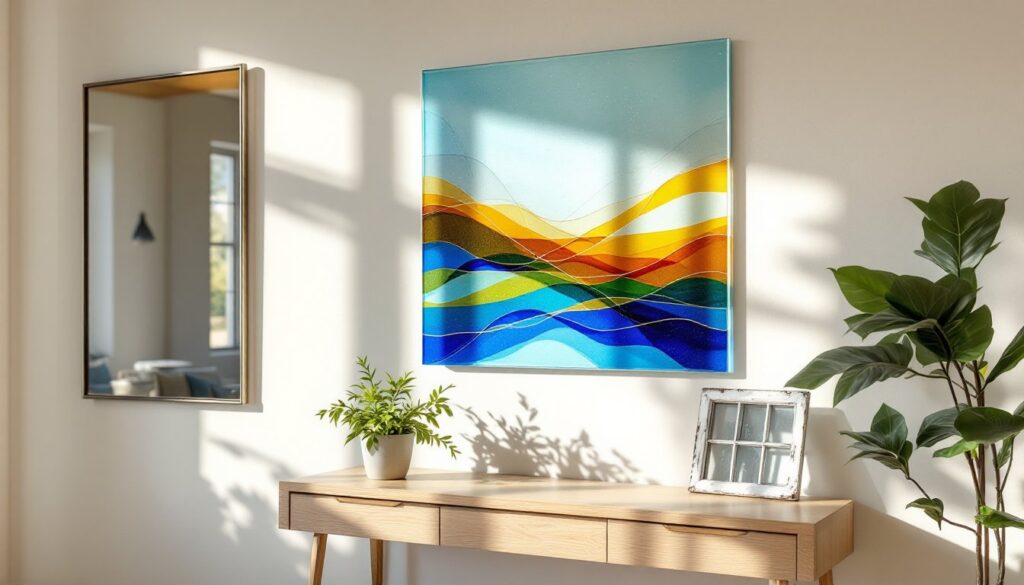
Fused glass panels and three-dimensional sculptures bring color and texture to flat walls. These pieces often feature layers of colored glass melted together, creating depth that shifts with lighting conditions throughout the day. Popular options include abstract wave patterns, botanical designs, and geometric compositions.
Mounting these requires attention to weight distribution. Most glass art panels over 12 inches in diameter weigh between 5 and 15 pounds. Use D-ring hangers with appropriate wall anchors, toggle bolts for drywall or masonry screws for studs. If the piece exceeds 20 pounds, mount directly into wall studs using a French cleat system for added security. Always wear safety gloves when handling cut glass edges during installation.
Abstract glass sculptures mounted on standoffs create a floating effect that works especially well in entryways and living rooms. The gap between the glass and wall allows light to pass behind, casting soft shadows that change as the sun moves. This dynamic quality makes them a strong choice for rooms with south- or west-facing windows.
Mirrors and Reflective Glass Accents
Mirrors are the workhorse of glass wall decor. Beyond their functional role, they’re strategic tools for manipulating space and light. A well-placed mirror opposite a window can double the perceived natural light in a room, particularly valuable in north-facing spaces or basements.
Frameless mirrors with beveled edges offer a modern, unobtrusive look. For farmhouse settings, consider mirrors in distressed wood frames or vintage window-style designs with divided panes. Antiqued mirror glass, treated to create a slightly mottled, aged appearance, splits the difference between rustic and refined.
Installation varies by size. Mirrors under 15 pounds typically mount with adhesive strips or sawtooth hangers. Larger mirrors (20+ pounds) require wall anchors rated for the load, or better yet, mounting directly into studs. For full-length or oversized mirrors, use J-bars or J-channels at the base to support the weight, then secure the top with brackets. Never rely on adhesive alone for mirrors over 10 pounds, gravity always wins.
Reflective glass accents, like mirrored tile mosaics or small clustered panels, add dimension without dominating a wall. These work well as accent wall ideas in dining rooms or behind open shelving in kitchens.
Framed Glass and Shadow Box Displays
Shadow boxes allow you to display three-dimensional objects, vintage tools, pressed flowers, family heirlooms, while keeping them protected. The glass front prevents dust accumulation and UV damage, making these ideal for preserving items with sentimental or historical value.
Depth matters when choosing shadow boxes. Standard frames are ¾ inch deep: shadow boxes range from 1 to 3 inches. For thicker objects like pocket watches or ceramic pieces, opt for deeper boxes to prevent the glass from pressing against the item.
Framed glass without backing, sometimes called “floating frames”, showcases translucent or printed glass art. These work best in front of solid-colored walls where the design stays crisp. When planning placement, contemporary interior design trends suggest grouping framed pieces in odd numbers (three, five, or seven) for visual balance.
Anti-reflective glass is worth the upgrade for artwork displayed in bright rooms. Standard glass creates glare that obscures the image at certain angles. Museum glass or UV-protective acrylic reduces reflections and prevents fading, though it costs roughly 30% more than standard glazing. For DIY framing, cut glass carefully using a glass cutter and straightedge, scoring once and snapping cleanly over a dowel. Always wear safety goggles and cut-resistant gloves.
How to Choose the Right Glass Wall Decor for Each Room
Room function drives decor decisions. In living rooms and family rooms, prioritize pieces that withstand activity and light traffic. Large mirrors and sturdy framed glass art work well here. Avoid delicate sculptures in homes with young kids or pets, glass is unforgiving when bumped.
Bedrooms benefit from softer, more personal glass decor. Shadow boxes displaying travel mementos, framed botanical prints under glass, or small mirrored accent walls behind nightstands add character without overwhelming the space. Keep mirrors away from direct bed sight lines if late-night reflections are distracting.
Kitchens and dining rooms handle glass differently. Here, easy-to-clean surfaces matter. Glass tile backsplashes or framed glass art with smooth, non-textured surfaces wipe down quickly. Reflective glass near dining areas can make the space feel larger, but avoid placing mirrors where they’ll reflect clutter or cooking messes.
Bathrooms require moisture-resistant mounting hardware. Use stainless steel or coated screws and anchors to prevent rust. Sealed shadow boxes work better than open frames in high-humidity environments. For added safety, consider tempered glass, it shatters into small, blunt pieces rather than sharp shards if broken, which matters in slip-prone wet rooms.
Hallways and entryways are prime real estate for statement pieces. Narrow spaces benefit from vertical glass panels or tall mirrors that draw the eye upward. Designers featured in publications like Elle Decor often use mirrored walls in tight entryways to visually expand the footprint. Just ensure the piece is securely mounted, hallways see frequent traffic and accidental bumps.
DIY Glass Wall Decor Projects You Can Create This Weekend
Vintage Window Frame Display: Source old windowpanes from salvage yards or online marketplaces. Clean the glass thoroughly with a 50/50 vinegar-water solution and a razor scraper for stubborn paint. Sand the frame with 120-grit sandpaper, prime with a bonding primer, and finish with semi-gloss paint or leave raw for a weathered look. Mount using heavy-duty picture hangers rated for the frame’s weight (typically 8–15 pounds for a 24″ x 36″ window).
Pressed Flower Shadow Box: Collect and press flowers between parchment paper and heavy books for 2–3 weeks. Arrange dried blooms on acid-free mat board inside a shadow box, securing with tiny dots of craft glue. Seal the box and hang using sawtooth hangers for frames under 5 pounds. This project works well in bedrooms or powder rooms where textural wall art adds a personal touch.
Mirror Mosaic Accent Panel: Cut mirror tiles (available in 12″ x 12″ sheets at home centers) into irregular shapes using a glass cutter. Wear safety goggles and heavy gloves, cut edges are razor-sharp. Arrange pieces on a plywood backing with ¼-inch gaps, adhering with mirror mastic adhesive. Grout with unsanded grout to avoid scratching the reflective surface. Mount the finished panel using French cleats for secure, flush installation.
Floating Glass Shelf Display: Install tempered glass shelves (⅜ inch thick minimum) with decorative metal brackets. Space brackets no more than 24 inches apart for ¼-inch glass, 36 inches for ⅜-inch glass. Use a level and stud finder to ensure even placement. These shelves showcase small glass objects or succulents while keeping walls visually light.
Most glass decor projects don’t require permits, but if you’re mounting heavy mirrors (50+ pounds) or altering wall structure, check local codes. When in doubt, mount into studs or consult a contractor for load-bearing wall concerns. Safety gear, goggles, gloves, and dust masks, isn’t optional when cutting or handling glass. Keep a shop vacuum handy: glass dust is nearly invisible and painful when tracked through the house.